Peace Lily Plant
The peace lily (Spathiphyllum) is a popular indoor plant known for its:
- glossy green leaves
- elegant white “flowers” (spathes)
- ability to grow in low-light conditions
Despite its name, the white part is not a true flower but a modified leaf called a spathe, which surrounds the actual tiny flowers on the spadix.
Peace lilies are loved for their beauty and air-purifying qualities, but they also require proper care to thrive and bloom repeatedly.
The Truth About “10 Years of Continuous Blooming”
Peace lilies do not bloom continuously year-round for long periods. Instead, they follow a natural cycle:
- growth phase (leaves develop)
- resting phase
- flowering phase (usually seasonal or periodic)
Even in perfect conditions, blooming is intermittent, not constant. A healthy peace lily may bloom several times a year, but not nonstop for a decade.
What Really Controls Peace Lily Flowering
Instead of one ingredient, multiple factors influence blooming:
1. Light Conditions
Peace lilies prefer:
- bright, indirect light
- they tolerate low light but may not bloom well
Too much direct sun can burn leaves, while too little light reduces flowering.
2. Watering Routine
Proper watering is essential:
- keep soil slightly moist
- avoid overwatering (causes root rot)
- allow top soil to dry slightly between watering
3. Humidity Levels
Peace lilies thrive in moderate to high humidity:
- dry air can reduce flowering
- misting or humid environments help plant health
4. Soil Quality and Drainage
Well-draining soil is important:
- prevents waterlogging
- supports healthy root growth
- improves nutrient absorption
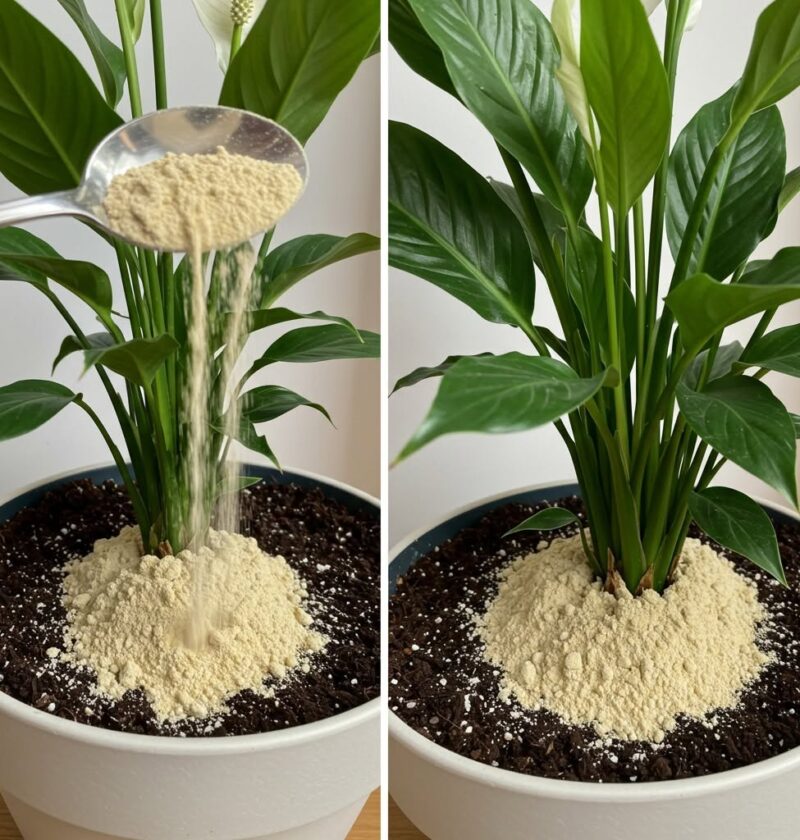
5. Fertilizer (The “One Ingredient” Myth)
Many viral posts claim one fertilizer ingredient causes continuous blooming. In reality:
Peace lilies benefit from: