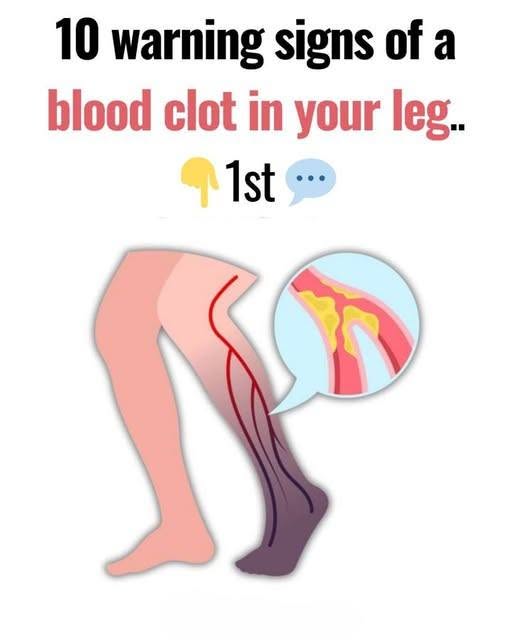
This headline refers to a real and potentially serious condition: Deep vein thrombosis (DVT). However, many articles inflate the number of “warning signs.” In reality, a few key symptoms are much more important than a long list.
Common signs of a blood clot in the leg (DVT)
🦵 Swelling in one leg
- Often the most noticeable symptom
- Usually affects one leg rather than both
🦵 Leg pain or tenderness
- Often in the calf
- May feel like a cramp, soreness, or pulled muscle
🔥 Warmth in the affected area
- The skin over the clot may feel warmer than the surrounding skin
🔴 Redness or discoloration
- The skin may appear red, purple, or darker than usual
🦵 Increased pain when standing or walking
- Symptoms may worsen with movement
Symptoms that need urgent attention
A DVT can become dangerous if part of the clot travels to the lungs, causing a Pulmonary embolism.
Seek urgent medical care if you have:
- Sudden shortness of breath
- Chest pain, especially when breathing deeply
- Coughing up blood
- Rapid heartbeat
- Fainting or severe dizziness
Who is at higher risk?
Risk increases with:
- Recent surgery or hospitalization
- Long periods of immobility (long flights, bed rest)
- Cancer
- Pregnancy and the postpartum period
- Certain hormone medications
- Previous blood clots
- Smoking
- Increasing age
Important note
Many people with DVT have few or no symptoms, and symptoms like leg pain or swelling can have many other causes. You cannot diagnose a blood clot from symptoms alone; doctors often use ultrasound imaging to confirm it.
Bottom line
The most important warning signs are:
- One-sided leg swelling
- Leg pain or tenderness
- Warmth
- Redness/discoloration
If these occur—especially together—or if you develop chest pain or shortness of breath, seek medical attention promptly. A blood clot is treatable, but early diagnosis matters.