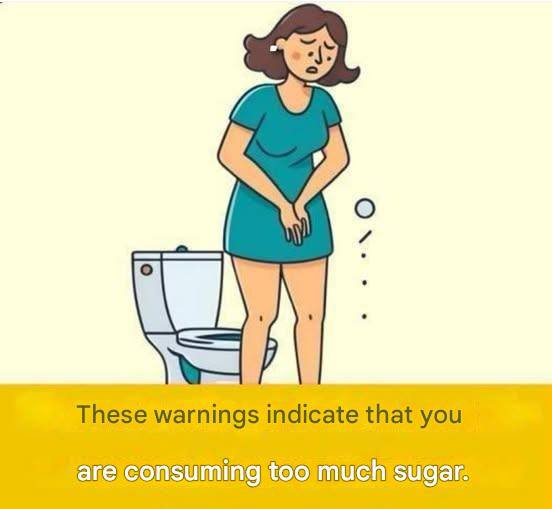
Here are 10 common warning signs that your sugar intake may be higher than your body comfortably handles:
- Constant cravings for sweets or carbs
Eating a lot of sugar can create a cycle of blood sugar spikes and crashes, making you want even more sugary foods. - Low energy and afternoon crashes
Quick sugar highs are often followed by fatigue, sluggishness, or brain fog. - Weight gain, especially around the belly
Excess added sugar — especially from sweet drinks and processed foods — is strongly linked to increased body fat. - Frequent acne or skin problems
High-sugar diets may increase inflammation and oil production, which can worsen breakouts in some people. - Mood swings or irritability
Rapid changes in blood sugar can affect concentration, mood stability, and stress levels. - Trouble sleeping
Too much sugar, especially late in the day, may interfere with sleep quality and hormone balance. - More cavities or dental problems
Sugar feeds bacteria in the mouth that produce acids damaging tooth enamel. - Feeling hungry soon after eating
Sugary foods are often less filling than meals rich in protein, fiber, and healthy fats. - High blood pressure or abnormal lab results
Over time, excessive sugar intake may contribute to elevated triglycerides, insulin resistance, and higher risk of Type 2 Diabetes. - Foods don’t taste sweet enough anymore
Regular exposure to high-sugar foods can reduce sensitivity to sweetness, making naturally sweet foods seem bland.
Common hidden sources of sugar
- Soft drinks and energy drinks
- Sweetened tea or coffee
- Breakfast cereals
- Flavored yogurt
- Sauces and ketchup
- Packaged snacks and “low-fat” foods
Simple ways to cut back
- Drink more water instead of sugary beverages
- Choose whole fruits over candy or desserts
- Read nutrition labels for “added sugars”
- Eat more protein and fiber to stay full longer
- Reduce sugar gradually to help your taste buds adjust
The World Health Organization recommends limiting added sugars to less than 10% of daily calories, with additional benefits below 5%.