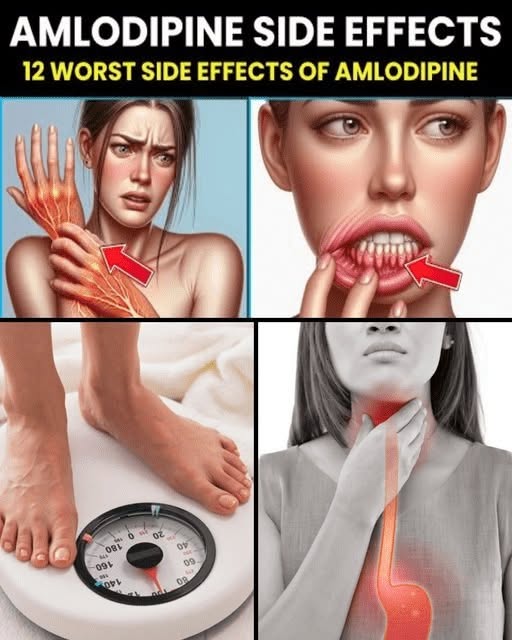
That headline is designed to sound alarming. In reality, amlodipine is a widely used and generally safe blood pressure medicine, and most side effects are known, predictable, and manageable.
Amlodipine (Amlodipine) works by relaxing blood vessels to lower blood pressure and reduce chest pain.
Common side effects (usually not dangerous)
These are frequent but typically mild:
- Swollen ankles or feet (very common)
- Headache
- Flushing (feeling warm or red in the face)
- Dizziness, especially when standing up
- Fatigue
- Mild palpitations
Side effects worth monitoring
Not emergencies, but worth discussing with a doctor if persistent:
- Noticeable weight gain (often from fluid retention)
- Ongoing swelling in legs
- Low blood pressure (lightheadedness)
- Nausea or stomach discomfort
Rare but serious side effects (seek medical help)
1. Severe allergic reaction
- Swelling of face, lips, tongue
- Trouble breathing
2. Severe chest pain or worsening angina
- Pain pattern changes or becomes more frequent
3. Fainting or extreme dizziness
- May indicate very low blood pressure
4. Fast or irregular heartbeat
- New or worsening rhythm problems
5. Severe shortness of breath
- Possible fluid overload or heart issue
6. Sudden, severe swelling of legs or body
- Could signal heart or kidney strain
7. Yellowing of skin or eyes (rare liver issue)
8. Severe skin rash or blistering
- Possible serious drug reaction
9. Confusion or extreme weakness
- Especially if sudden
10. Reduced urination
- Possible kidney involvement
Important context
- Most people only experience mild effects like ankle swelling
- These symptoms don’t mean you must stop the medication immediately
- Stopping blood pressure medicine suddenly can be dangerous
Bottom line
The “never ignore” lists online often mix normal, expected effects with rare complications to create fear. Real medical advice focuses on severity, sudden changes, and persistence, not isolated mild symptoms.
If you want, tell me what you’re experiencing or your dose, and I can help you judge whether it sounds normal or needs medical attention.