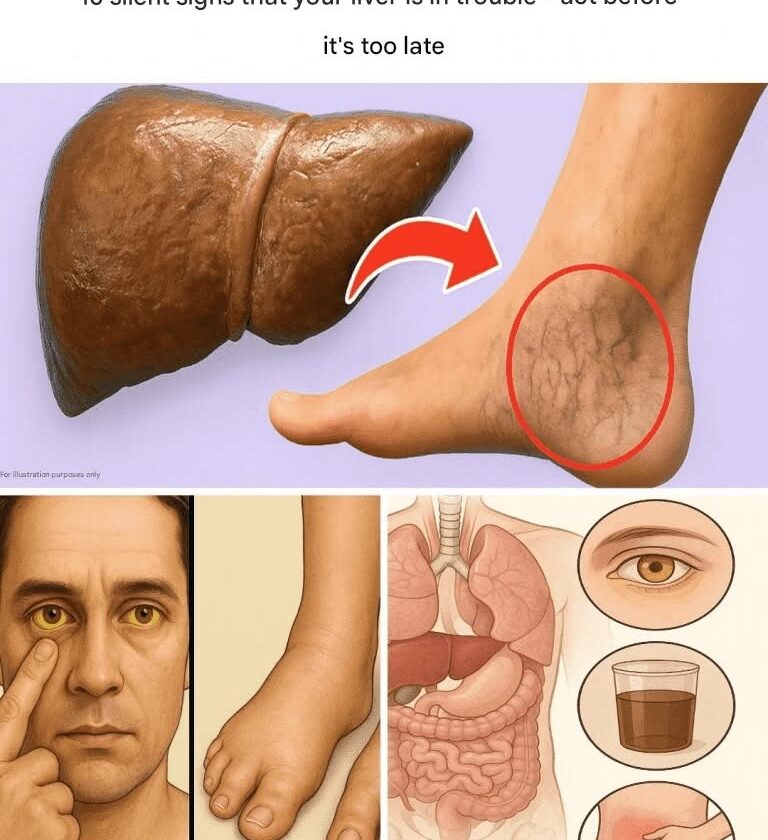
The title “15 Silent Signs Your Liver Is in Trouble – Act Before It’s Too Late” is designed to grab attention. While liver disease can sometimes cause subtle symptoms, many of these signs are not specific to liver disease and can occur with many other conditions.
Possible Signs of Liver Problems
Some symptoms that can be associated with liver disease include:
- Persistent fatigue
- Loss of appetite
- Nausea
- Unexplained weight loss
- Itchy skin
- Easy bruising
- Swelling in the legs or ankles
- Abdominal swelling (fluid buildup)
- Pain or discomfort in the upper right abdomen
- Dark urine
- Pale or clay-colored stools
- Yellowing of the skin or eyes (Jaundice)
- Confusion or difficulty concentrating (in advanced liver disease)
- Spider-like blood vessels on the skin
- Redness of the palms
Why They’re Called “Silent”
Many liver conditions, including Nonalcoholic fatty liver disease, can progress for years with few or no symptoms. That’s why routine medical care and appropriate testing are important for people at higher risk.
Common Causes of Liver Disease
- Excessive alcohol use
- Viral hepatitis, such as Hepatitis B and Hepatitis C
- Fatty liver disease associated with obesity, diabetes, or metabolic syndrome
- Certain medications and toxins
- Autoimmune liver diseases
When to Seek Medical Attention
Contact a healthcare professional if you develop:
- Yellowing of the eyes or skin
- Significant abdominal swelling
- Vomiting blood or black stools
- New confusion or marked sleepiness
- Severe abdominal pain
These can indicate serious liver dysfunction and require prompt evaluation.
What You Can Do
If you’re concerned about your liver health:
- Limit or avoid alcohol
- Maintain a healthy weight
- Exercise regularly
- Manage diabetes, high cholesterol, and blood pressure
- Discuss medication and supplement use with your doctor
- Consider liver function testing if you have risk factors
Bottom line
A list of “15 silent signs” can be useful as a reminder, but none of these symptoms alone proves liver disease. The liver is often called a “silent” organ because significant disease can be present