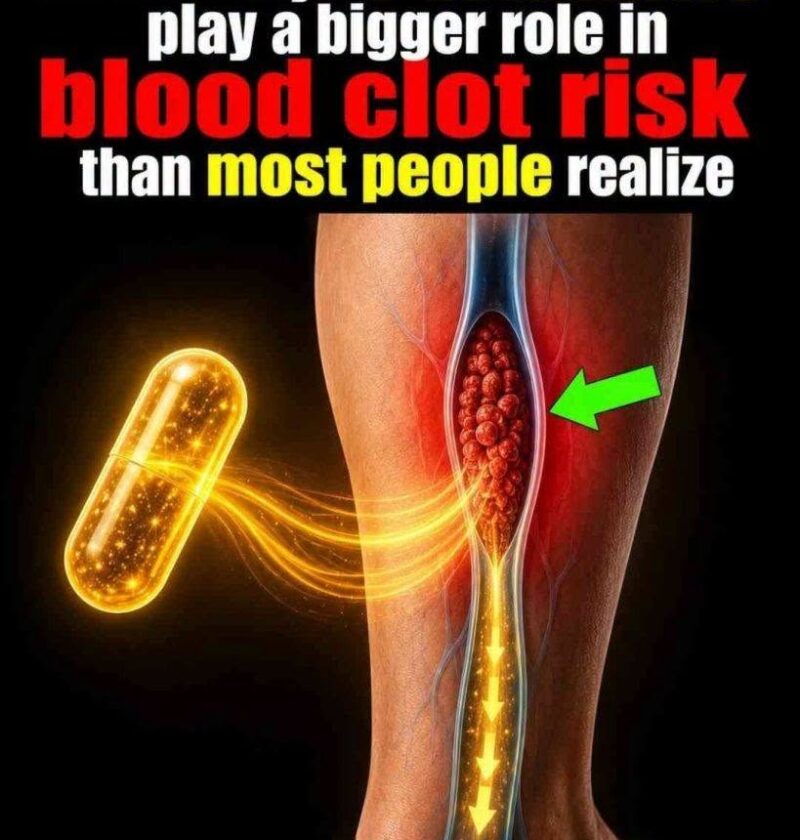
Vitamins can support normal blood vessel function and overall cardiovascular health, but they do not “prevent blood clots in your legs” on their own. A dangerous leg blood clot (deep vein thrombosis, or DVT) is influenced by factors such as age, immobility, surgery, certain medical conditions, smoking, genetics, and some medications. If you have a high risk of clots, medical advice is important.
That said, these nutrients play roles in healthy circulation:
1. Vitamin B12
- Helps maintain healthy red blood cells and normal nerve function.
- A deficiency can contribute to anemia and fatigue, which may affect how you feel during activity.
- Sources: fish, eggs, dairy, meat, and fortified foods.
2. Folate (Vitamin B9)
- Works with B12 in normal blood cell production.
- Helps regulate homocysteine levels; elevated homocysteine is associated with cardiovascular risk.
- Sources: leafy greens, beans, lentils, and fortified grains.
3. Vitamin C
- Supports collagen production, which helps maintain the structure of blood vessels.
- Acts as an antioxidant.
- Sources: citrus fruits, berries, peppers, and vegetables.
4. Vitamin D
- Important for overall health, including muscle and immune function.
- Low levels have been associated in studies with various cardiovascular risks, though supplements do not replace proven clot-prevention strategies.
- Sources: sunlight exposure, fortified foods, and supplements when recommended.
More proven ways to support circulation and reduce clot risk:
✅ Walk and move regularly, especially during long trips or sitting periods
✅ Maintain a healthy weight
✅ Stay hydrated
✅ Avoid smoking
✅ Manage blood pressure, cholesterol, and diabetes
✅ Follow prescribed medications if you have clot risk factors
Seek urgent medical care for possible DVT symptoms such as one-sided leg swelling, warmth, redness, pain/tenderness in the calf, or sudden shortness of breath/chest pain. These can require immediate evaluation.