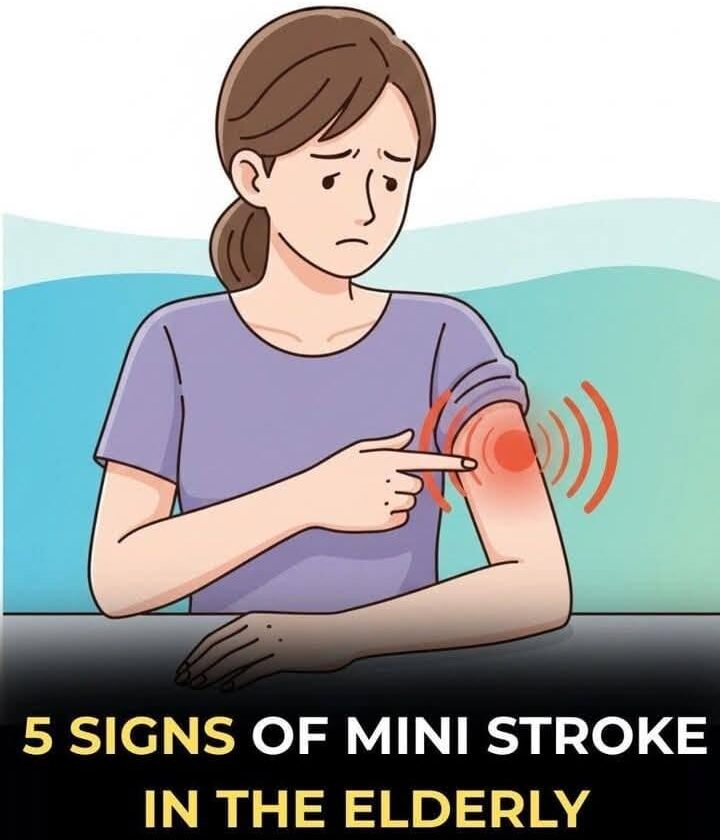
5 Signs of a Mini-Stroke (TIA) in the Elderly
A mini-stroke, medically known as a transient ischaemic attack (TIA), happens when blood flow to part of the brain is temporarily blocked. The symptoms may last only a few minutes or hours and can disappear completely—but a TIA is still a serious warning sign because it can indicate an increased risk of a full stroke.
Older adults are at higher risk because conditions such as high blood pressure, diabetes, heart disease, and narrowing of the arteries become more common with age.
1. Sudden Weakness or Numbness
One of the most common warning signs is sudden weakness, tingling, or numbness, especially on one side of the body.
It may affect:
- Face
- Arm
- Leg
A person may suddenly have trouble lifting one arm or notice that one side of their face feels different.
2. Trouble Speaking or Understanding Words
A TIA can affect the brain areas responsible for communication.
Signs include:
- Slurred speech
- Difficulty finding the right words
- Confusion during conversation
- Trouble understanding what others are saying
Even if speech returns to normal, it should not be ignored.
3. Sudden Vision Problems
Temporary changes in vision can occur, such as:
- Loss of vision in one eye
- Blurred vision
- Double vision
- Difficulty focusing
Sudden vision changes require urgent medical assessment.
4. Loss of Balance, Dizziness, or Coordination Problems
A mini-stroke can affect areas of the brain involved in movement and balance.
Possible signs:
- Sudden dizziness
- Difficulty walking
- Feeling unsteady
- Poor coordination
- Increased risk of falling
These symptoms can be mistaken for normal ageing, but sudden changes should be checked.
5. Sudden Severe Headache or Confusion
Some people experience:
- A sudden, unusual headache
- Confusion
- Difficulty thinking clearly
- Changes in alertness
A severe headache with neurological symptoms needs urgent evaluation.
Remember FAST
The FAST test can help recognise stroke symptoms:
F – Face: Does one side of the face droop?
A – Arms: Can the person raise both arms evenly?
S – Speech: Is speech unclear or unusual?
T – Time: Call emergency services immediately if any signs appear.
What to Do if Symptoms Disappear
A common mistake is to ignore symptoms because they improve. A TIA can be a warning that a major stroke may happen soon.
Seek urgent medical advice even if:
- Symptoms lasted only a few minutes
- The person feels normal again
- There is no remaining weakness or confusion