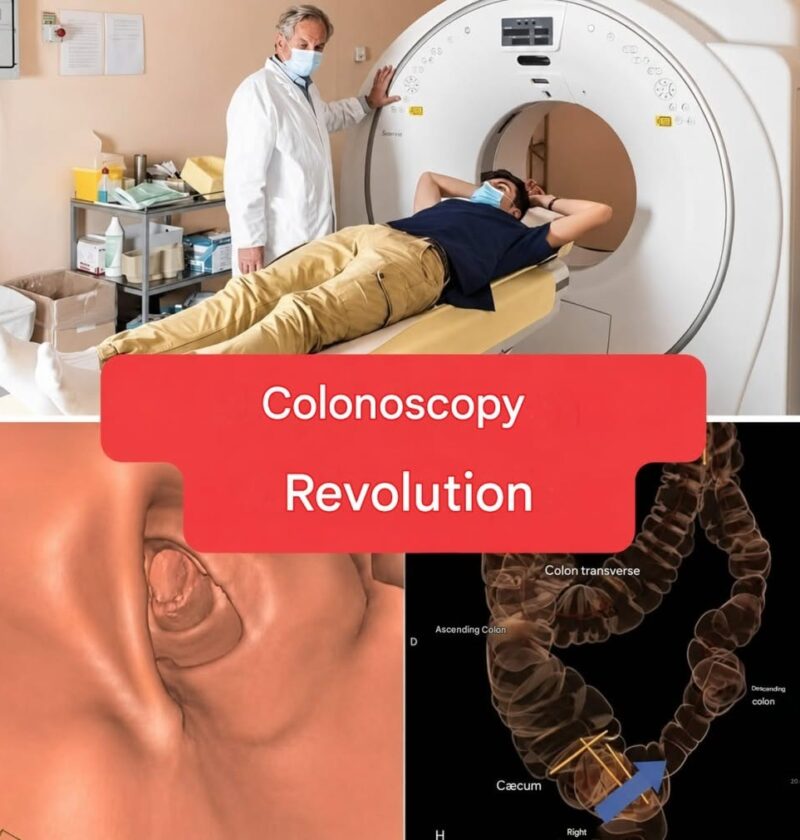
That headline is overstated.
A colonoscopy is still considered an invasive procedure because a flexible camera is inserted through the rectum to examine the colon. It remains the gold standard for detecting and removing precancerous polyps and diagnosing many colon conditions, including colorectal cancer.
What “new method” might refer to
Researchers and healthcare systems are increasingly using less-invasive screening options, such as:
- FIT (Fecal Immunochemical Test) — a stool test that looks for hidden blood.
- Stool DNA tests — analyze stool samples for abnormal DNA and blood markers.
- CT colonography (“virtual colonoscopy”) — uses CT imaging to examine the colon.
- Capsule endoscopy — a swallowable camera capsule used in some situations.
Important limitation
These alternatives do not fully replace colonoscopy.
If a stool test or CT colonography finds something suspicious, a traditional colonoscopy is usually needed to:
- Confirm the diagnosis
- Remove polyps
- Take tissue samples (biopsies)
Why colonoscopy is still widely used
A colonoscopy is unique because it can both find and treat certain problems during the same procedure.
Bottom line
- Colonoscopy has not become a non-invasive examination.
- New screening methods can reduce the need for some colonoscopies, but they have not eliminated them.
- The best screening test depends on a person’s age, risk factors, symptoms, and medical history.
If you’ve seen a specific article or video claiming a new non-invasive replacement, feel free to share it and I can explain what the technology actually does.