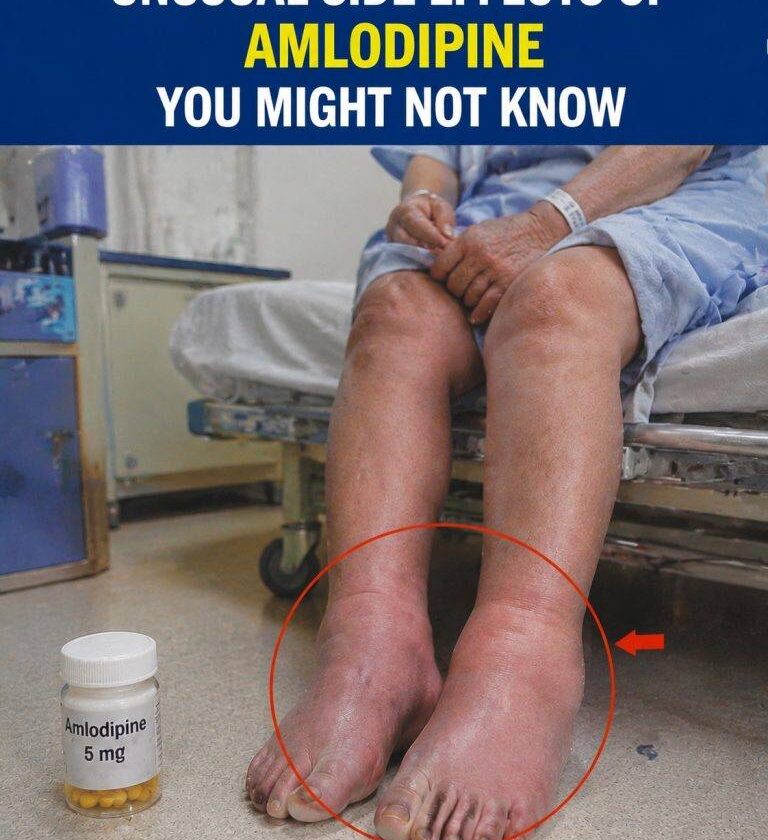
That headline is designed to sound alarming. Amlodipine is actually a very commonly prescribed and generally well-tolerated blood pressure medicine. Most people take it without serious problems.
That said, like all medications, it can cause side effects—some mild, a few important to recognize.
⚠️ Common side effects (usually not dangerous)
These are the ones most patients notice:
- Swelling of ankles or feet (very common)
- Headache
- Flushing or warmth in the face
- Dizziness (especially when starting)
- Fatigue
- Mild palpitations
These often improve as the body adjusts.
🚨 Serious side effects you should not ignore
1. Severe swelling
- Sudden or very painful swelling of legs or feet
- Could indicate fluid retention or worsening heart strain
2. Chest pain or worsening angina
- Rare, but important
- Any new or worsening chest pressure needs urgent evaluation
3. Very low blood pressure
- Extreme dizziness, fainting, or weakness
- Especially after standing up
4. Fast or irregular heartbeat
- Persistent palpitations or racing heart
5. Liver problems (rare)
- Yellowing of eyes/skin (jaundice)
- Dark urine, severe fatigue
6. Allergic reactions (very rare)
- Rash, itching, swelling of face/lips
- Breathing difficulty → emergency
🧠 Important context
- Most people tolerate amlodipine long-term very well
- Side effects are usually dose-related
- Doctors often adjust dose rather than stop it abruptly
🚫 Never do this
- Don’t stop amlodipine suddenly without medical advice
- Don’t self-adjust dose based on social media warnings
🧾 Bottom line
Amlodipine is safe for most patients, and serious side effects are rare but important to recognize early, especially swelling, chest pain, or fainting.
If you want, tell me:
- your dose
- what symptoms you’re experiencing