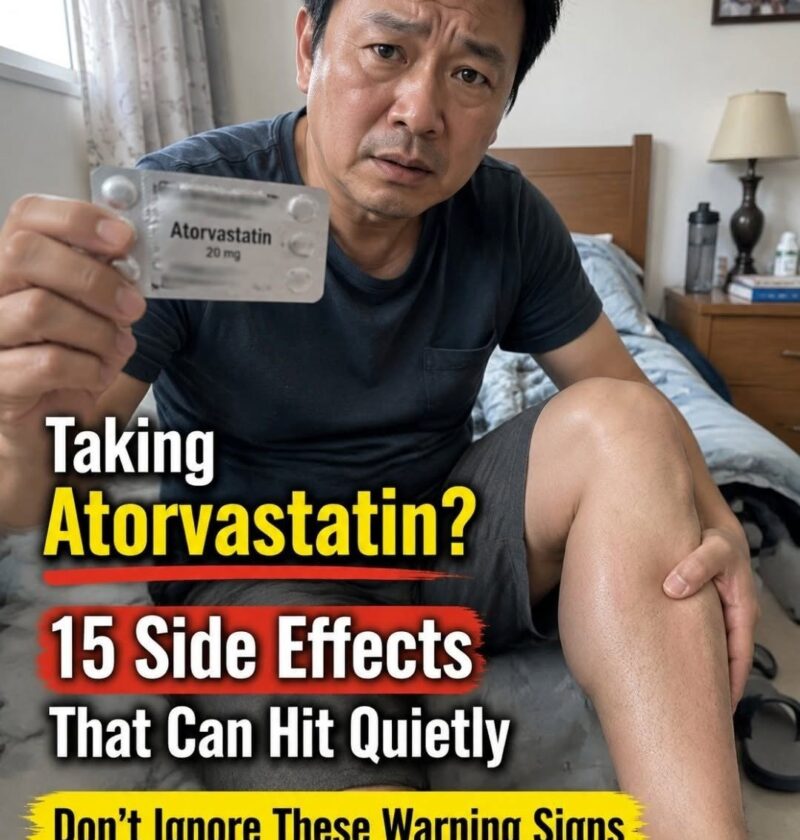
Taking Atorvastatin? Could These 15 Subtle Side Effects Be Affecting You?
Atorvastatin is one of the most commonly prescribed medications for lowering cholesterol and reducing the risk of heart attacks and strokes. For most people, it’s safe and well tolerated. However, like any medicine, it can cause side effects. Some are obvious, while others are subtle enough that people may not immediately connect them to their medication.
It’s important to remember that many people taking atorvastatin experience no side effects at all, and you should not stop taking it without speaking to your healthcare provider, as doing so may increase your risk of cardiovascular disease.
Here are 15 possible side effects to be aware of.
1. Muscle Aches or Soreness
One of the best-known side effects is muscle pain, tenderness, or stiffness. It may feel like you’ve overexercised even when you haven’t.
2. Muscle Weakness
Some people notice reduced strength when climbing stairs, lifting objects, or exercising. Persistent or worsening weakness should be discussed with a doctor.
3. Fatigue
Feeling unusually tired or lacking energy may occur, although fatigue can have many different causes.
4. Joint Pain
Mild aches in the knees, shoulders, hands, or other joints have been reported by some people taking statins.
5. Headaches
Headaches may occur, particularly during the first few weeks after starting treatment.
6. Digestive Upset
Some people experience:
- Nausea
- Indigestion
- Bloating
- Constipation
- Diarrhoea
- Stomach discomfort
These symptoms often improve as the body adjusts.
7. Difficulty Sleeping
A small number of people report insomnia or changes in their sleep pattern while taking atorvastatin.
8. Mild Memory or Concentration Problems
Some people have reported forgetfulness or difficulty concentrating while taking statins. The evidence is mixed, and if these symptoms occur, it’s important to discuss them with your doctor rather than stopping the medication yourself.
9. Tingling or Numbness
Occasional tingling sensations in the hands or feet have been reported, although they are relatively uncommon.
10. Elevated Blood Sugar
Statins may slightly increase blood sugar levels in some people, particularly those already at risk of developing type 2 diabetes. However, for most people, the cardiovascular benefits outweigh this small risk.
11. Mild Liver Enzyme Changes
Atorvastatin can increase liver enzyme levels without causing symptoms. Healthcare professionals may occasionally recommend blood tests to monitor this, particularly after starting treatment or increasing the dose.
12. Reduced Exercise Tolerance
Some people find they become tired more quickly during physical activity or that recovery after exercise takes longer.
13. Skin Rash or Itching
Mild skin irritation, itching, or a rash can occur but is relatively uncommon.
14. Dizziness
Some people feel light-headed, particularly when first starting the medication or after a dose adjustment.
15. Changes in Urine Colour with Severe Muscle Injury (Rare)
Very rarely, statins can cause severe muscle damage called rhabdomyolysis. Symptoms may include:
- Severe muscle pain or weakness
- Dark brown or cola-coloured urine
- Fever or feeling generally unwell
This is a medical emergency and requires immediate medical attention.
When Should You Contact Your Doctor?
Arrange medical advice if you experience:
- Muscle pain or weakness that is severe, persistent, or unexplained.
- Yellowing of the skin or eyes.
- Severe stomach pain.
- Persistent nausea or vomiting.
- A rash with swelling or difficulty breathing (seek emergency care immediately).
Don’t Stop Atorvastatin Without Advice
If you think you’re experiencing side effects, speak with your doctor or pharmacist. They may recommend:
- Adjusting your dose.
- Switching to a different statin.
- Looking for another cause of your symptoms.
- Monitoring your condition with blood tests.
Stopping atorvastatin without medical advice can increase your risk of heart attack and stroke, especially if it has been prescribed because you’re at high cardiovascular risk.