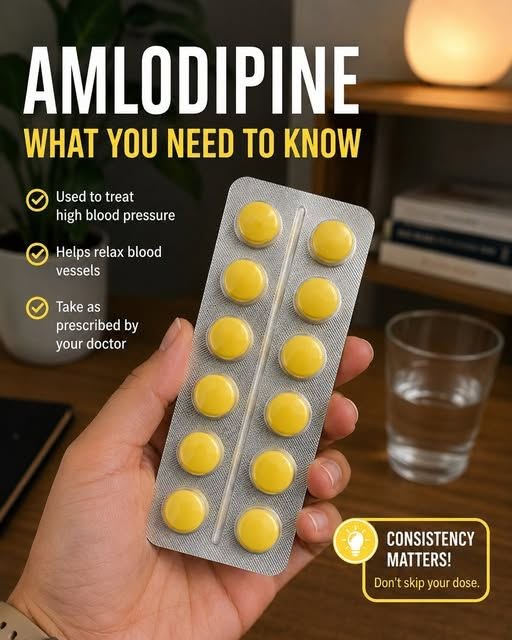
That headline is another clickbait-style exaggeration. If you’re taking Amlodipine, there aren’t “8 forbidden habits,” but there are habits that can interfere with blood pressure control, reduce the medication’s effectiveness, or increase side effects.
Amlodipine is a calcium channel blocker used for high blood pressure and chest pain, and the goal is simple: keep blood pressure stable and protect the heart.
Here are the real habits worth adjusting (and why they matter):
1. 🧂 Eating too much salt
High sodium intake can directly counteract the effect of amlodipine.
- Causes fluid retention
- Raises blood pressure
- Makes medication less effective
2. 🍺 Heavy alcohol use
Alcohol can:
- Increase blood pressure over time
- Worsen dizziness from amlodipine
- Add strain on the heart
Moderation matters more than complete avoidance.
3. 🛋️ Sitting for long periods
A sedentary lifestyle:
- Reduces circulation benefits of the medication
- Increases cardiovascular risk overall
Even light daily walking helps.
4. 🚬 Smoking
Smoking damages blood vessels and:
- Raises blood pressure
- Increases heart disease risk
- Works against the protective effect of amlodipine
5. ☕ Excess caffeine
High caffeine intake may:
- Temporarily raise blood pressure
- Increase palpitations or anxiety in sensitive people
Moderation is key, not elimination.
6. 💊 Skipping doses or inconsistent timing
Amlodipine works best with steady blood levels.
- Missing doses can cause BP fluctuations
- Reduces long-term protection
7. ⚠️ Taking certain medications without checking
Some drugs can interact or affect blood pressure control, such as:
- NSAIDs (like ibuprofen in high or long-term use)
- Certain decongestants
Always check with a doctor or pharmacist.
8. 🧠 Ignoring lifestyle management
Relying only on medication without:
- Healthy diet
- Exercise
- Weight control
…reduces long-term effectiveness of treatment.