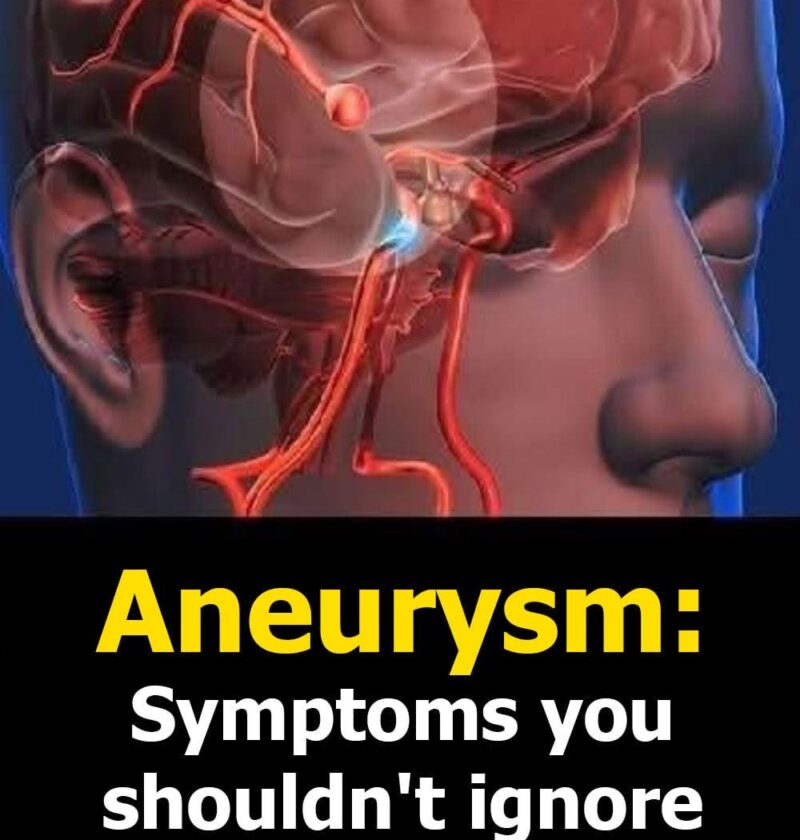
That headline is trying to grab attention, but the topic is real and important. An Aneurysm is a bulging or weakened area in a blood vessel that can become dangerous if it ruptures.
The key issue is: many aneurysms have no symptoms until they become serious, so knowing warning signs matters.
🚨 Signs you should never ignore (possible aneurysm warning)
1. Sudden, severe “worst headache of your life”
- Often linked to a brain aneurysm rupture
- May feel explosive or thunderclap-like
2. Sudden vision problems
- Blurred vision
- Double vision
- Drooping eyelid
This can happen if an aneurysm presses on nearby nerves.
3. Pain above or behind the eye
- Deep, persistent pain
- Sometimes one-sided
4. Sudden neck pain or stiffness
- Especially if paired with headache or neurological symptoms
5. Weakness, numbness, or paralysis
- One side of the face or body
- Trouble speaking or understanding speech
These can overlap with stroke-like symptoms.
6. Pulsing or throbbing lump (in some cases)
- May be felt in large surface arteries (rare)
- Often seen in abdominal or peripheral aneurysms
7. Sudden dizziness or loss of consciousness
- Can indicate rupture or internal bleeding
⚠️ Important reality check
- Most aneurysms develop silently
- Many are found incidentally on scans
- A rupture is a medical emergency
🧠 Who is at higher risk?
Risk increases with:
- High blood pressure
- Smoking
- Family history
- Certain genetic conditions
- Age (risk rises over time)
🚑 When to seek emergency help
Go to emergency care immediately if you experience:
- Sudden severe headache
- Fainting or collapse
- New neurological symptoms (speech, vision, weakness)
- Severe, unexplained head or neck pain
🧾 Bottom line
Aneurysms are rare but serious. The biggest warning sign is sudden, extreme symptoms—especially a thunderclap headache or neurological changes.
If you want, I can also explain:
- how aneurysms are detected early
- or how they are treated (clipping vs coiling)
- or which symptoms are not aneurysms (common false alarms)