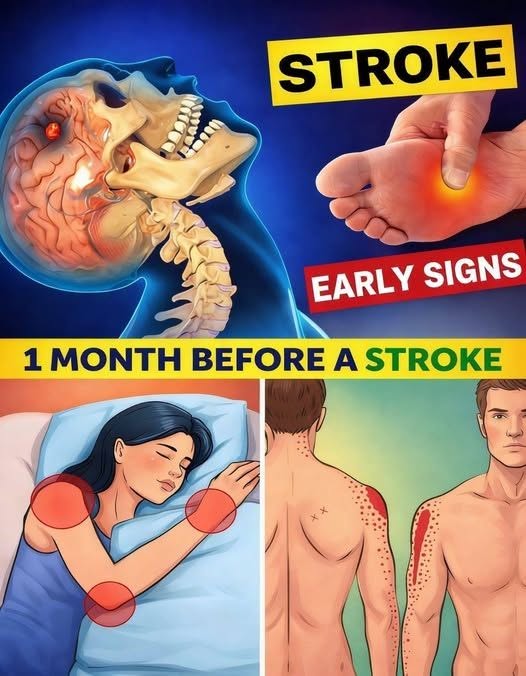
A stroke can sometimes be preceded by early warning signs—most importantly mini-strokes (Transient Ischemic Attacks, or TIAs) or gradually developing vascular problems. However, there is no guaranteed set of symptoms that will appear exactly “one month before.” What doctors emphasize is that early neurological changes should never be ignored, even if they come and go.
Here are commonly reported early warning signs associated with increased stroke risk.
8 Warning Signs That May Appear Weeks Before a Stroke
These symptoms may occur intermittently and often resolve on their own (especially in TIAs), but they are serious signals of risk:
- Sudden numbness or weakness
- Especially on one side of the face, arm, or leg
- Brief episodes of speech difficulty
- Slurred speech or trouble forming words
- Temporary vision problems
- Blurred vision, double vision, or loss of vision in one eye
- Unexplained dizziness or loss of balance
- Feeling unsteady, vertigo-like episodes
- Sudden severe headaches
- Especially if unusual for you and without a clear cause
- Confusion or difficulty understanding speech
- Trouble processing simple sentences
- Short episodes of facial drooping
- One side of the face may feel “off” or look uneven
- Brief numbness or tingling spells
- Especially recurring episodes affecting one side of the body
These symptoms are strongly associated with Stroke risk, particularly when they occur suddenly and repeatedly.
9 Tips to Help Prevent a Stroke
Prevention focuses on controlling vascular risk factors and lifestyle habits:
- Control blood pressure
- The most important preventable risk factor
- Manage diabetes
- Keep blood sugar within target range
- Lower cholesterol
- Reduce plaque buildup in arteries
- Quit smoking
- Smoking significantly increases clot risk
- Exercise regularly
- Aim for at least 150 minutes of moderate activity per week
- Maintain a healthy weight
- Reduces strain on heart and blood vessels
- Eat a heart-healthy diet
- Focus on fruits, vegetables, whole grains, and lean proteins
- Limit salt and processed foods
- Helps control blood pressure
- Get regular medical checkups
- Especially if you have family history or risk factors
Important note
If someone experiences sudden neurological symptoms—even if they disappear within minutes—they should treat it as an emergency. A TIA can be a strong warning that a full stroke may occur soon.
If you want, I can also explain how to quickly recognize a stroke using FAST signs (Face, Arms, Speech, Time) or list risk factors specific to age, diet, or genetics.