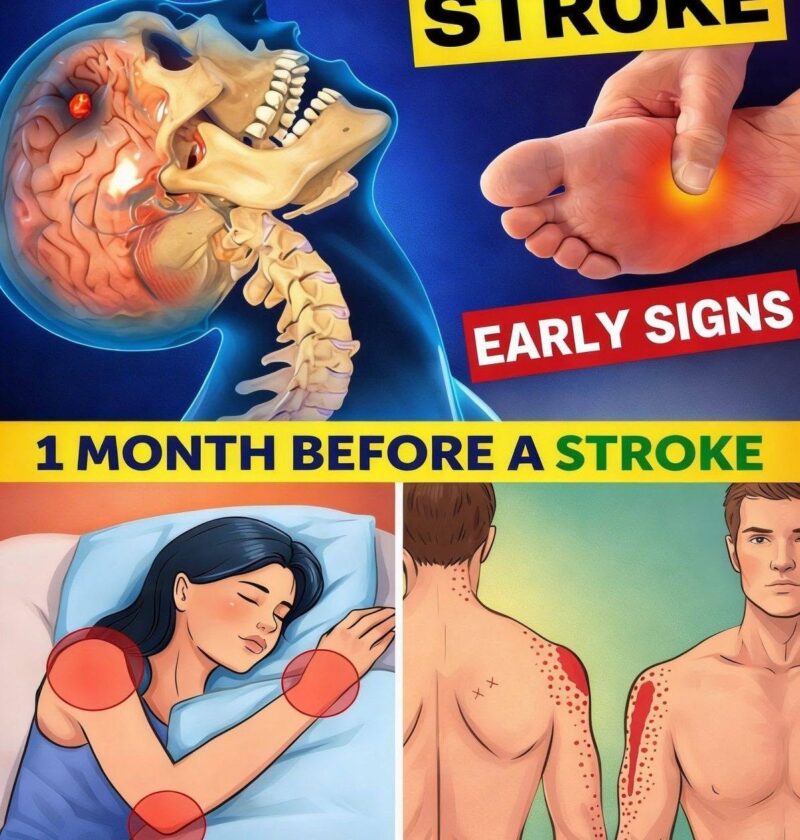
That title is another example of fear-based content that mixes some real medical knowledge with exaggeration.
A stroke (Stroke) usually happens suddenly, but in some people there can be warning events beforehand—especially something called a mini-stroke or TIA.
⚠️ Possible early warning signs (days to weeks before in some cases)
Not everyone has these, but doctors recognize they can occur:
1) Sudden numbness or weakness (even if it goes away)
- Face, arm, or leg—often one side only
2) Temporary speech problems
- Slurred speech or trouble finding words
3) Brief vision changes
- Blurred vision or loss of vision in one eye
4) Unexplained dizziness or balance issues
- Trouble walking straight or sudden coordination loss
5) Severe unusual headaches
- Especially if different from your normal headaches
6) Episodes of confusion
- Sudden difficulty understanding things
7) Tingling or “dead” feeling in limbs
- Especially if one-sided
8) Transient ischemic attack (TIA)
- A “mini-stroke” where symptoms disappear within minutes/hours but signal high risk
🚨 Important truth
There is no reliable “1-month countdown” list for stroke.
Some people get warning signs, others get none at all.
🛡️ Evidence-based ways to reduce stroke risk
1) Control blood pressure (most important)
High BP is the #1 risk factor.
2) Manage blood sugar
Diabetes increases stroke risk significantly.
3) Stop smoking
One of the strongest preventable risk factors.
4) Stay physically active
Even 30 minutes of walking daily helps.
5) Healthy diet
- Less salt and processed food
- More vegetables, fruits, whole grains
6) Maintain healthy weight
Reduces strain on heart and blood vessels.
7) Limit alcohol
Heavy drinking increases risk.
8) Manage cholesterol
Especially LDL levels.
9) Treat heart conditions
Like atrial fibrillation or irregular heartbeat.
⏱️ Emergency rule (very important)
If any sudden symptoms occur, remember FAST:
- Face drooping
- Arm weakness
- Speech difficulty
- Time to call emergency help immediately
🧠 Bottom line
- Some early warning signs can happen, but not always
- There is no guaranteed “one-month warning system”
- Prevention is mainly about long-term health control, not miracle detection lists
If you want, I can also explain your personal risk level for stroke based on age, blood pressure, lifestyle, and symptoms in a simple way.