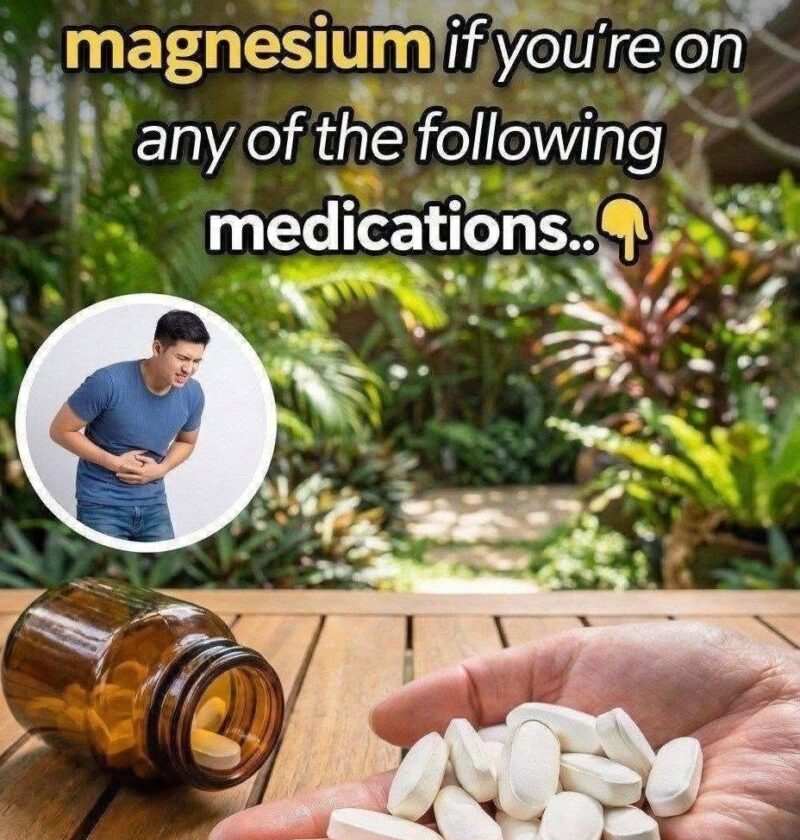
That claim is misleading in its general form. Magnesium does not “badly reduce the power” of most blood pressure or heart medications. In many cases it’s neutral, and sometimes it’s even beneficial for blood pressure or heart rhythm support.
However, magnesium can interact with certain cardiovascular and related medications in specific ways, mainly by:
- reducing absorption (if taken at the same time)
- increasing risk of low blood pressure or slowed heart rate in sensitive people
- affecting electrolyte balance (especially in kidney disease)
Here are the real, clinically relevant interactions:
1) Blood pressure meds — usually safe, but watch BP too low in some cases
Amlodipine (calcium channel blocker)
- No major direct interaction with magnesium
- Both can lower blood pressure slightly → additive effect in some people
Diltiazem
- Similar situation: generally safe, but may enhance BP/heart-rate lowering in sensitive patients
Lisinopril (ACE inhibitor)
- No direct dangerous interaction
- Main concern is kidney function: if kidneys are impaired, magnesium can accumulate
Hydrochlorothiazide (thiazide diuretic)
- Not a clash—in fact opposite effect:
- This drug can lower magnesium levels
- So magnesium is sometimes supplemented intentionally
2) Heart rhythm / cardiac meds — more important caution
Metoprolol (beta blocker)
- No direct harmful interaction
- Possible additive slowing of heart rate or BP in some people, but usually mild
Digoxin
- Magnesium does not reduce its effect
- But magnesium levels matter for safety:
- Low magnesium increases digoxin toxicity risk
- Normal magnesium is often protective
3) The most important true magnesium interactions (often missed)
These are actually more significant than blood pressure meds:
- Antibiotics (tetracyclines, quinolones) → magnesium blocks absorption
- Thyroid medicine (levothyroxine) → reduced absorption
- Bisphosphonates (for bones) → reduced absorption
👉 These require spacing doses by 2–6 hours.
4) When magnesium CAN become risky
The real danger is not “med clashes” but:
- Kidney disease (magnesium builds up in the body)
- Very high supplement doses (not food intake)
- Severe dehydration or frailty
Bottom line
- Most blood pressure and heart meds do NOT get “weakened” by magnesium
- The biggest issue is timing with absorption-sensitive drugs, not BP medications themselves
- Serious problems are rare and usually kidney-related, not drug interaction-related
If you want, tell me which specific meds you’re taking, and I can check the exact combination for you (that’s where the real accuracy matters, not generic warnings).