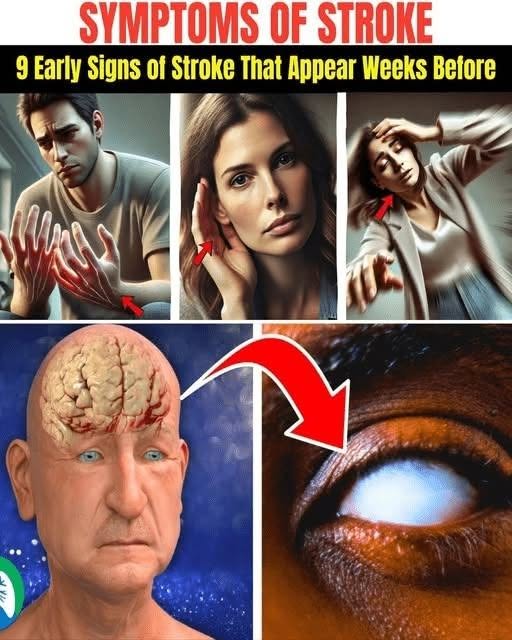
That headline is another exaggerated “warning list” style claim.
A stroke usually does not reliably announce itself a week in advance. However, some people—especially older adults—may experience warning events or risk symptoms before a stroke, most importantly mini-strokes (TIAs).
Let’s separate myth from real medical warning signs.
🧠 First: what can happen before a stroke
⚠️ Transient Ischemic Attack (TIA)
A Transient Ischemic Attack is often called a “mini-stroke.”
It happens when blood flow to the brain is briefly blocked and then restores.
Key point:
- Symptoms last minutes to hours
- Then fully disappear
- BUT stroke risk is high in the next days/weeks
So this is the closest thing to a “warning a week before.”
🚨 Real warning signs (may appear suddenly, not gradually)
1. Face drooping
One side of the face looks uneven
2. Arm or leg weakness
Often on one side of the body
3. Speech problems
Slurred speech or trouble understanding words
4. Vision changes
Blurred or lost vision in one eye or both
5. Sudden dizziness or imbalance
Trouble walking or coordination issues
⚠️ Other symptoms that sometimes appear before stroke risk increases
These are risk clues, not guaranteed warnings:
6. Brief confusion episodes
Feeling “foggy” or disoriented temporarily
7. Unusual headaches
More relevant in hemorrhagic stroke cases
8. Numbness or tingling
Especially one-sided and sudden
9. Episodes of weakness that come and go
Often ignored but important
🧓 Why seniors are more at risk
In older adults, stroke risk increases due to:
- High blood pressure
- Atherosclerosis (clogged arteries)
- Diabetes
- Irregular heartbeat (like atrial fibrillation)
- Previous TIA or stroke
🚨 Important reality check
- There is no reliable “9-day warning pattern”
- Stroke symptoms are usually sudden, not slowly building
- The real emergency is not prediction—it’s immediate action when symptoms appear
🧠 FAST rule (most important takeaway)
- Face drooping
- Arm weakness
- Speech difficulty
- Time to call emergency services
🟢 Bottom line
The only scientifically supported “early warning stroke event” is a TIA (mini-stroke). Everything else in clickbait lists is usually just general risk symptoms mixed together.
If you want, I can also explain:
- how to tell stroke vs anxiety vs low blood sugar (they can look similar)
- or the top preventable causes of stroke in seniors today
- or what lifestyle changes reduce risk the most (with real evidence)