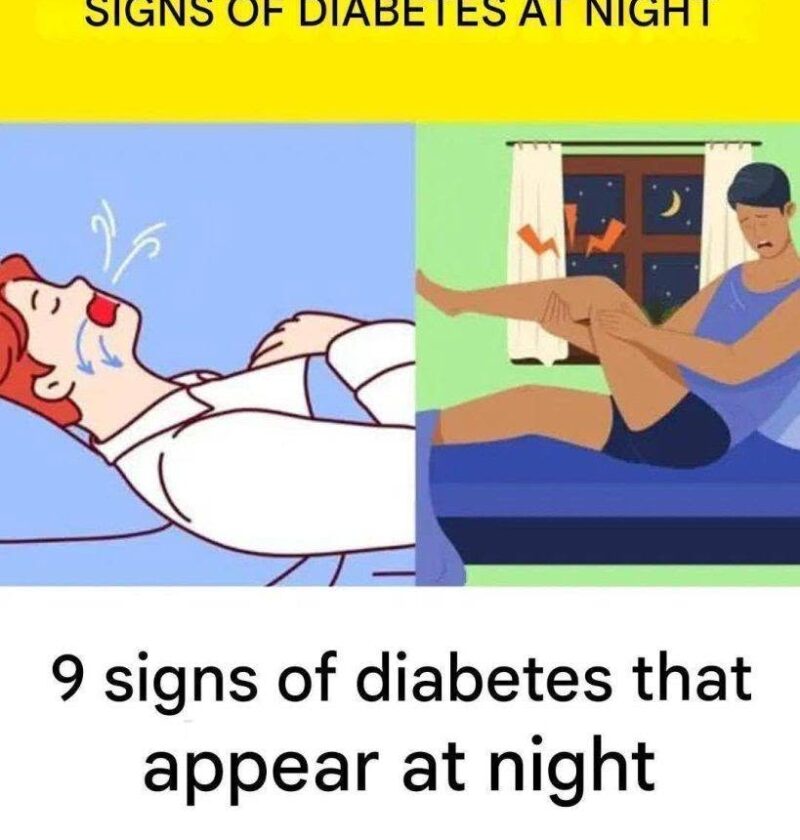
Here are 9 nighttime signs that can be associated with Diabetes Mellitus — especially undiagnosed or poorly controlled diabetes:
- Frequent urination at night (nocturia)
High blood sugar makes the kidneys work harder to remove excess glucose, causing you to wake up often to urinate. - Excessive thirst during the night
Losing fluids through frequent urination can leave you dehydrated and very thirsty. - Night sweats
Low blood sugar episodes during sleep (more common in people taking insulin or diabetes medications) can trigger sweating and shakiness. - Restless sleep or insomnia
Blood sugar swings may interfere with normal sleep patterns. - Leg cramps or restless legs
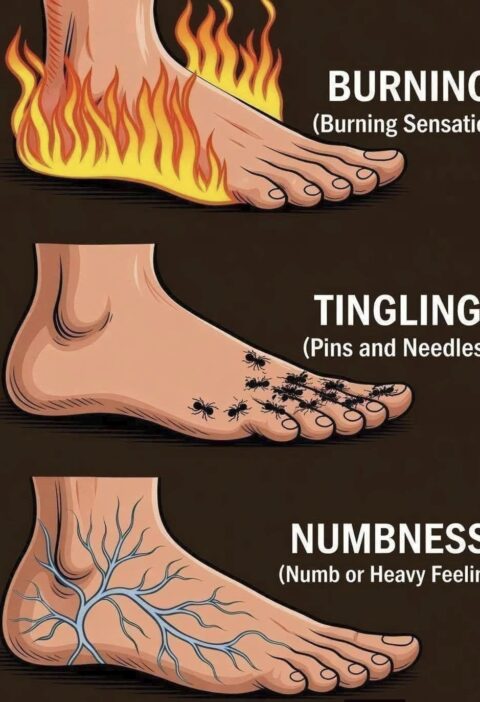
Diabetes can affect nerves and circulation, causing discomfort that becomes more noticeable at night. - Numbness, tingling, or burning in the feet
This may be a sign of diabetic nerve damage (neuropathy), which often worsens at bedtime. - Loud snoring or sleep apnea
Obstructive Sleep Apnea is more common in people with type 2 diabetes and can cause choking/gasping during sleep. - Extreme fatigue despite sleeping
Poor glucose control can prevent restorative sleep and leave you exhausted in the morning. - Waking up hungry or with headaches
Overnight blood sugar fluctuations may cause early-morning hunger, headaches, or irritability.
Important
These symptoms do not automatically mean diabetes, but they are worth checking — especially if you also notice:
- unexplained weight changes
- blurred vision
- increased daytime thirst
- slow-healing wounds
- frequent infections
A doctor can confirm diabetes with simple blood tests such as:
- fasting blood glucose
- HbA1c
- oral glucose tolerance test
Seek urgent medical attention if symptoms include:
- vomiting
- confusion
- fruity-smelling breath
- severe weakness
- rapid breathing
Those can signal dangerously high blood sugar.