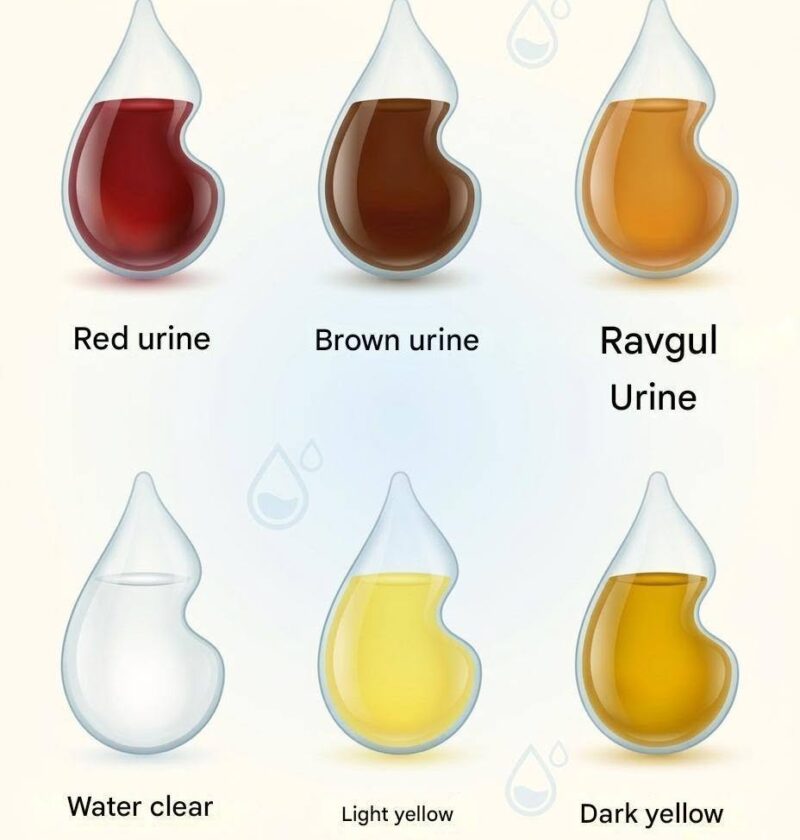
Urine color can give useful clues about hydration and sometimes health, but it’s not a diagnosis by itself. The urinary system produces urine as a waste product filtered by the kidneys:
Kidney disease
Here’s what different colors usually mean:
💧 Clear to very light yellow
- Very well hydrated
- Sometimes overhydration (drinking more water than needed)
🌤️ Pale yellow (ideal)
- Normal and healthy
- Good hydration level
🍯 Dark yellow or amber
- Mild dehydration (most common cause)
- You may need more water
🍊 Orange
Possible causes:
- Dehydration
- Certain medications or vitamins
- Sometimes liver or bile issues if persistent
If it continues, it should be checked.
🍷 Pink or red
Possible causes:
- Blood in urine
- Certain foods (beetroot)
- Urinary tract infection
This should not be ignored if unexplained.
🟤 Brown or tea-colored
Possible causes:
- Severe dehydration
- Liver or kidney problems
- Muscle breakdown in rare cases
Needs medical evaluation if persistent.
🟢 Blue or green (rare)
- Certain medications or dyes
- Rare bacterial infections
Usually uncommon and needs medical review if unexplained.
⚠️ When to see a doctor
Get checked if urine color change comes with:
- Pain or burning
- Fever
- Blood
- Persistent dark color
- Swelling or fatigue
🧠 Bottom line
Urine color is mainly a hydration indicator, not a full health report. The most important normal range is usually light to pale yellow. Persistent unusual colors may need medical attention, especially if linked to symptoms involving the kidneys:
Kidney disease
If you want, I can also give you a simple urine color chart you can memorize in 10 seconds for quick self-checks.