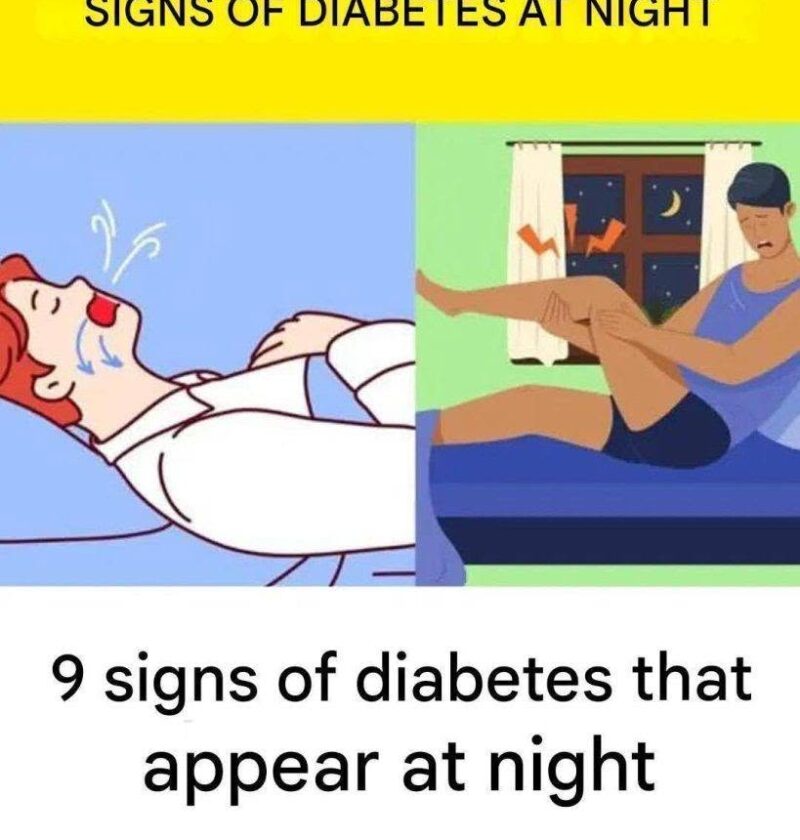
These can be associated with Type 2 Diabetes (and sometimes prediabetes or insulin issues).
9 signs that may show up at night
1) Frequent nighttime urination
Waking up multiple times to urinate (nocturia) can happen when blood sugar is high and the body tries to flush excess glucose.
2) Excess thirst at night
You may wake up feeling very dry or needing water repeatedly.
3) Night sweats
Unexplained sweating during sleep can occur with blood sugar fluctuations.
4) Nighttime hunger
Some people experience strong hunger at night due to unstable glucose levels.
5) Restless sleep or insomnia
High or fluctuating blood sugar can interfere with normal sleep cycles.
6) Leg cramps at night
Electrolyte imbalance or nerve irritation related to diabetes may contribute.
7) Tingling or burning in feet or legs
This may be an early sign of nerve involvement (diabetic neuropathy).
8) Morning headaches or fatigue
Poor overnight glucose control can lead to feeling unrefreshed in the morning.
9) Waking up with dry mouth
Often linked with dehydration from high blood sugar and frequent urination.
Important context
These symptoms do not confirm diabetes on their own. They can also be caused by:
- High fluid intake before bed
- Sleep disorders
- Medications
- Kidney or prostate issues (in men)
- Stress or anxiety
When to get tested
You should consider a blood sugar test if you notice:
- Multiple symptoms together
- Symptoms that persist for weeks
- Family history of diabetes
- Increased thirst + frequent urination
Bottom line
Nighttime symptoms can be an early clue, but diabetes is diagnosed only through blood tests, not symptoms alone.
If you want, I can also list the early daytime signs of diabetes or explain normal vs abnormal blood sugar readings.