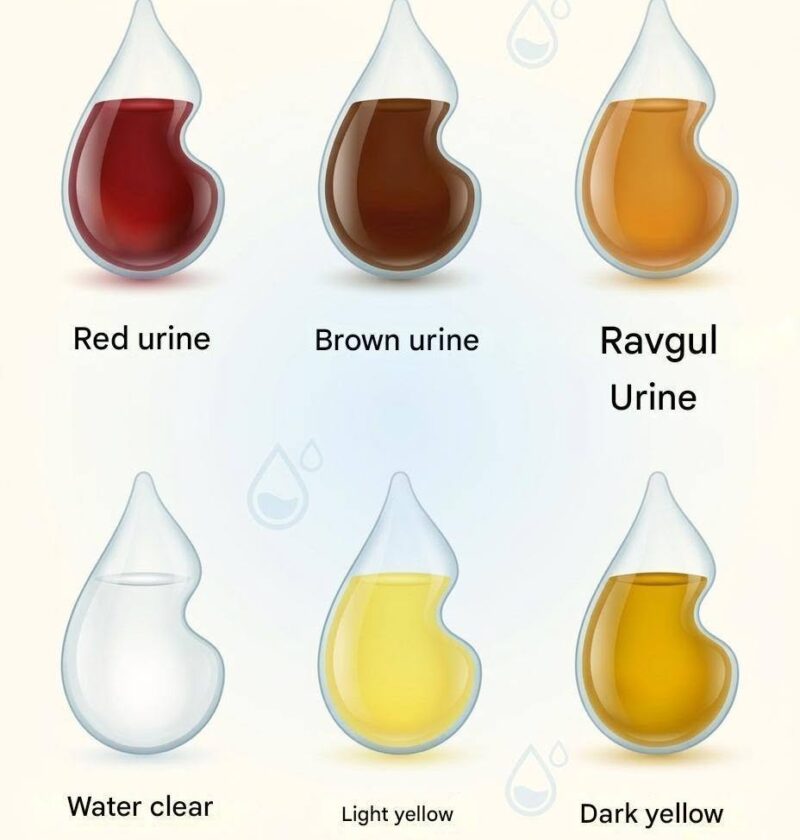
The color of your urine can give useful clues about hydration and sometimes overall health—but it’s not a diagnosis on its own. It’s best seen as a general signal, not a test.
Urine color is mainly influenced by hydration, diet, medications, and sometimes medical conditions.
What different urine colors may mean
1. Light yellow to pale straw (ideal)
- Usually a sign of good hydration
- Kidneys are functioning normally in most cases
2. Dark yellow or amber
- Most commonly means dehydration
- You may need more fluids
- Can also appear after sweating, fasting, or morning urine
3. Very clear urine
- Often means overhydration
- Usually harmless, but if constant, you may be drinking more water than needed
4. Orange
- Can be due to dehydration or certain foods
- Some medications or vitamin B supplements can also cause this
- If persistent, may need medical evaluation (liver/bile issues in rare cases)
5. Pink or red
- Could be from foods like beetroot or berries
- But can also indicate blood in urine, which should be checked
6. Brown or cola-colored
- Severe dehydration sometimes
- Possible liver or kidney issues in some cases
- Needs medical attention if not food-related
7. Blue or green (rare)
- Often from dyes, foods, or medications
- Very rarely linked to infections or metabolic conditions
When to be concerned
See a healthcare professional if:
- Red/pink color is not from food
- Brown urine persists
- Urine is cloudy with pain, burning, or fever
- Strong foul smell continues with other symptoms
Key takeaway
Urine color is most reliable as a hydration guide, not a full health diagnostic tool. Light yellow is usually a good target.
If you want, I can also explain:
- what urine smell or foam might mean
- or how to use urine color for hydration tracking during exercise or hot weather