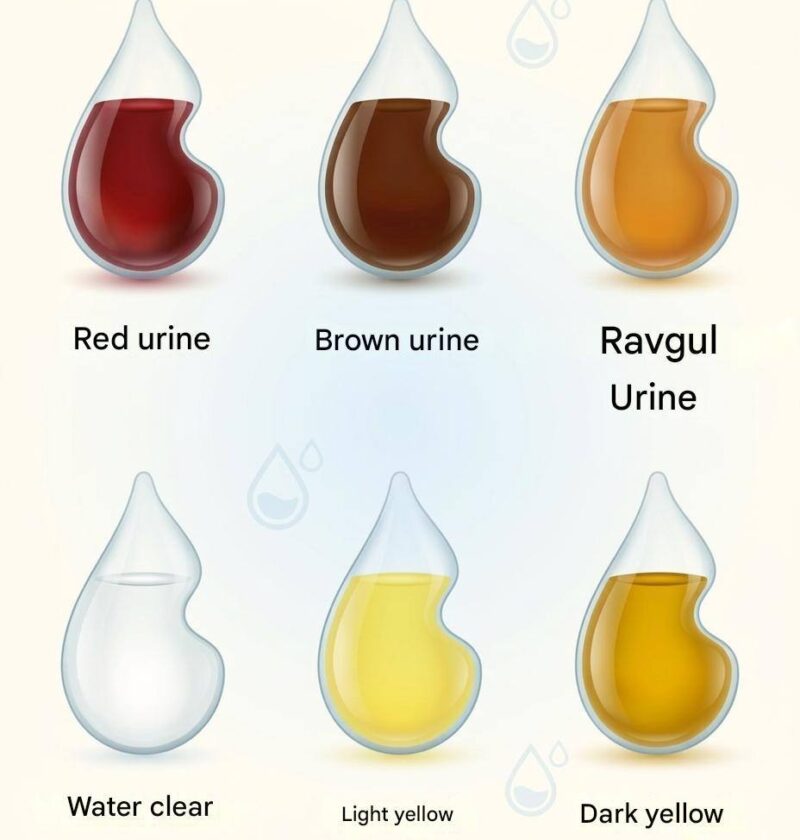
Urine color can give clues about hydration, diet, medications, and sometimes health problems. Here’s a general guide:
| Urine Color | What It May Mean |
|---|---|
| Pale yellow to clear | Usually normal and well hydrated |
| Dark yellow or amber | Dehydration |
| Bright yellow | Often from vitamins, especially B vitamins |
| Orange | Dehydration, certain medications, or possible liver/bile issues |
| Pink or red | Blood, foods like beets/berries, or some medications — should be checked if unexplained |
| Brown or cola-colored | Severe dehydration, liver disease, muscle breakdown, or certain foods/drugs |
| Green or blue | Rare; sometimes from food dyes, medications, or infections |
| Cloudy or milky | Possible infection, kidney stones, or excess minerals |
| Foamy or bubbly | Sometimes normal, but persistent foam may suggest excess protein in urine |
A healthy urine color is usually light straw yellow.
You should contact a healthcare professional if you notice:
- Red or bloody urine
- Brown/tea-colored urine
- Persistent cloudiness or strong odor
- Pain, burning, fever, or frequent urination
- Foamy urine that keeps happening
Certain conditions such as Urinary Tract Infection, Kidney Disease, or Liver Disease can sometimes change urine color.