That warning is exaggerated.
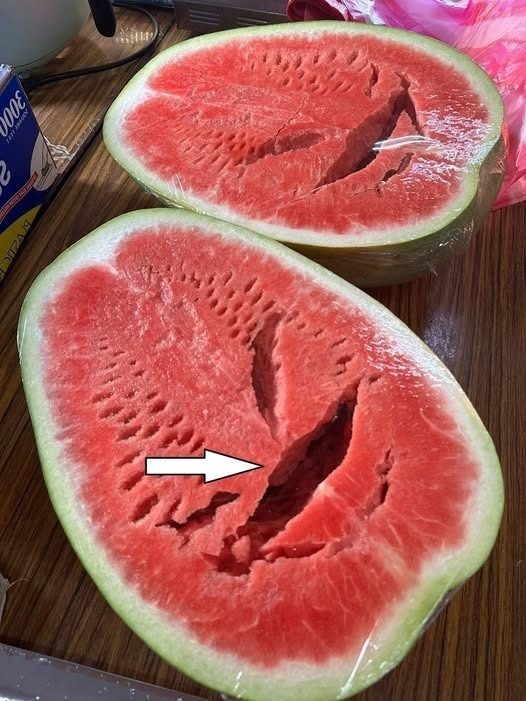
If you cut open a watermelon and see cracks or “fissures” inside, it usually does not mean it’s dangerous or poisonous. In most cases, it’s a normal agricultural issue called internal cracking.
Why those cracks happen
Common reasons include:
- Rapid growth: The fruit grows too fast, so the inside can’t keep up and splits slightly.
- Water fluctuations: Heavy rain or over-watering after a dry period can cause internal stress.
- Overripeness: Very ripe melons can develop soft internal separations.
- Variety traits: Some watermelon types are simply more prone to hollow or cracked flesh.
- “Hollow heart” effect: A known condition where the flesh forms internal gaps or cracks.
Is it safe to eat?
Usually yes—if:
- It smells normal
- No mold is present
- Texture isn’t slimy or fermented
You might notice:
- Slightly grainy texture
- Less sweetness in some areas
- A dry or hollow-looking center
When NOT to eat it
Discard it if you see:
- Sour or alcoholic smell
- Visible mold (white, green, black spots)
- Slimy or mushy flesh throughout
Bottom line
Cracks inside watermelon are usually a quality issue, not a safety warning. Viral posts often exaggerate it into something dangerous, but in reality it’s mostly about how the fruit grew.
If you want, you can share a photo of what you saw—I can tell you if it looks normal or not.