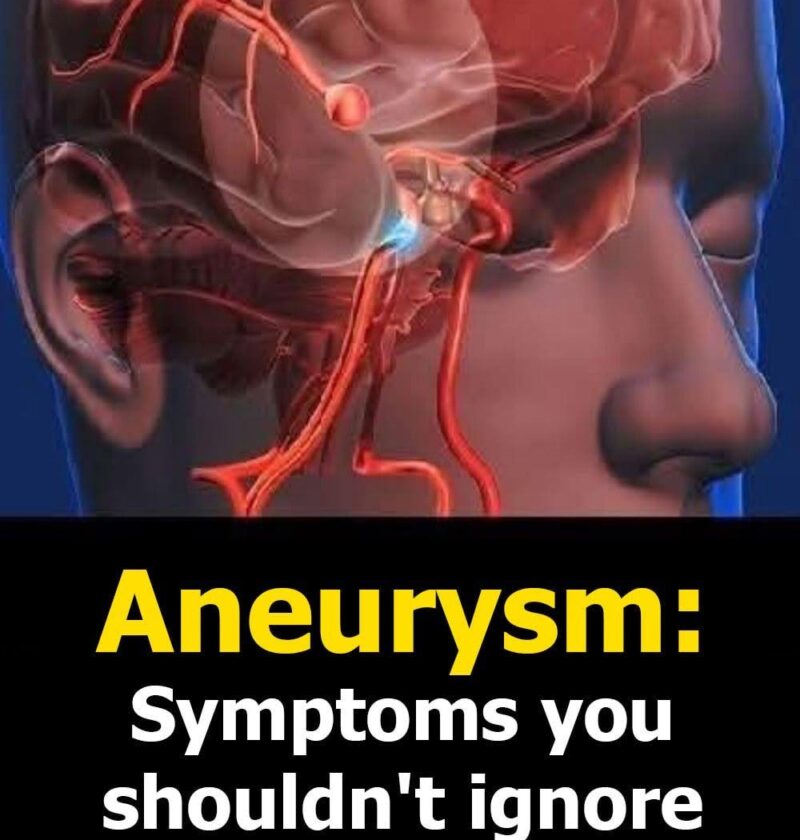
Here are the key signs you should not ignore, depending on where the aneurysm occurs:
1. Sudden, severe headache (“worst headache of your life”)
This can be a sign of a brain aneurysm rupture (subarachnoid hemorrhage).
May be accompanied by:
- Neck stiffness
- Nausea or vomiting
- Sensitivity to light
- Loss of consciousness
2. Sudden vision problems
Possible signs:
- Blurred or double vision
- Drooping eyelid
- Loss of vision in one eye
This can happen if an aneurysm presses on nearby nerves in the brain.
3. Sudden weakness, numbness, or difficulty speaking
Warning signs of a brain bleed:
- One-sided weakness (face, arm, or leg)
- Slurred speech
- Confusion
These symptoms require emergency care immediately.
4. Severe chest, back, or abdominal pain
May suggest a aortic aneurysm (large artery in chest or abdomen), especially if:
- Pain is sudden and tearing in nature
- Pain radiates to back or abdomen
- You feel faint or sweaty
5. Pulsating feeling in abdomen
A possible sign of an abdominal aortic aneurysm:
- Deep, persistent throbbing near the belly button
- Sometimes felt more when lying down
6. Shortness of breath or hoarseness
Can occur if an aneurysm presses on airways or nerves in the chest.
7. Loss of consciousness or collapse
May indicate rupture and internal bleeding — a medical emergency.
When to seek emergency help
Call emergency services immediately if someone has:
- Sudden severe headache
- Fainting or collapse
- Chest/back/abdominal tearing pain
- Stroke-like symptoms
These can be signs of a life-threatening rupture.
Important context
Most aneurysms are:
- Silent (no symptoms) before rupture
- Found incidentally during scans
- More common with risk factors like:
- High blood pressure
- Smoking
- Older age
- Family history
Bottom line
The most dangerous sign is sudden, severe pain or neurological symptoms that appear out of nowhere. These should always be treated as emergencies, not something to “wait and see.”
If you want, I can explain how aneurysms are detected early and who should get screened.