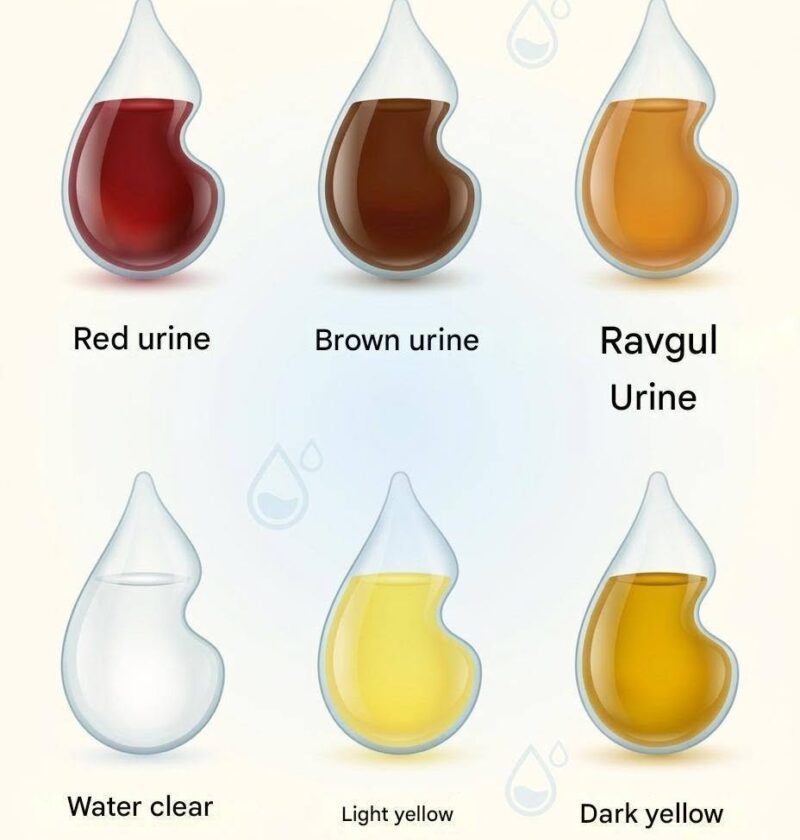
The color of your urine can give useful clues about hydration and sometimes health issues, but it’s not a diagnosis by itself.
Urine is mostly water mixed with waste products filtered by your kidneys, so its color changes based on concentration and what’s in your body.
🚰 Urine color guide and what it may mean
💧 Clear / very light yellow
- Very well hydrated
- Sometimes overhydration if constantly crystal clear
- Usually normal
🟡 Pale yellow (ideal range)
- Normal, healthy hydration
- This is generally the target color
🌕 Dark yellow / amber
- Mild dehydration
- You may need more fluids
- Common after sweating, fasting, or low water intake
🧡 Honey / orange
- More significant dehydration
- Can also come from:
- Certain vitamins (especially B-complex)
- Some medications
- If persistent, worth monitoring
🟥 Pink / red
- Possible causes:
- Blood in urine (infection, stones, or other issues)
- Beetroot or food dyes (harmless in some cases)
- If not food-related, get medical attention
🟤 Brown / cola-colored
- Can indicate:
- Severe dehydration
- Liver or kidney issues
- Muscle breakdown (rare but serious)
- Should be checked if it persists
🟢 Blue / green (rare)
- Often from:
- Certain medications or dyes
- Rare metabolic or infection causes
⚠️ When to see a doctor
- Blood-colored urine not linked to food
- Pain or burning while urinating
- Strong persistent odor + fever
- Brown or very dark urine that doesn’t improve with hydration
🧠 Key takeaway
- Light yellow = healthy baseline
- Darker shades usually mean you need more fluids
- Unusual colors that persist should be checked
If you want, I can also explain urine smell changes, foaminess, or frequency and what they can indicate.