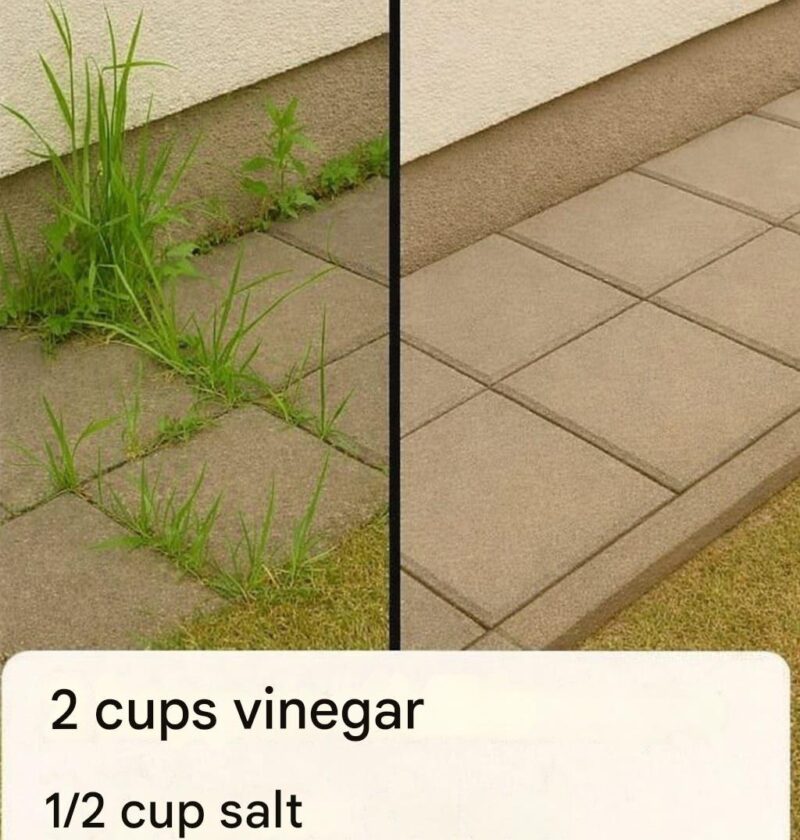
You can make a fairly effective homemade, non-selective herbicide using common household ingredients—but it’s important to know upfront: these mixtures usually kill any plant they touch, and they can also harm soil health if overused.
1. Vinegar-based weed killer (most common)
This is the backbone of most DIY herbicides.
Ingredients:
- White vinegar (5% acidity for light weeds, 10–20% horticultural vinegar for stronger effect)
- A few drops of dish soap
How it works:
Vinegar (acetic acid) burns plant tissue, especially young weeds. Soap helps it stick to leaves.
Use:
- Mix vinegar + 1–2 teaspoons dish soap per liter
- Spray directly on leaves on a hot, sunny day
- Reapply after a few days if needed
2. Salt + vinegar mixture (stronger but risky)
This is more powerful but can damage soil for a long time.
Ingredients:
- 1 liter vinegar
- 2–3 tablespoons salt (table salt or rock salt)
- A few drops dish soap
How it works:
Salt dehydrates plants and can prevent regrowth—but it also makes soil less fertile for future planting.
Warning:
Use only on cracks, gravel, driveways—not garden beds.
3. Boiling water (simple and underrated)
- Pour directly onto weeds (especially between tiles or pathways)
- Works instantly on contact
No chemicals, but also non-selective.
Important limitations
- These are contact herbicides, not systemic ones → they don’t kill deep roots well (like dandelions).
- Works best on young, small weeds
- Multiple applications are usually needed
- Rain can reduce effectiveness
Safety notes
- Avoid spraying near crops or grass you want to keep
- Keep away from pets until dry
- Don’t overuse salt-based mixes in soil areas
If you want, tell me where you’re trying to use it (garden beds, lawn, driveway cracks), and I can suggest a more targeted mix that won’t cause unnecessary damage.