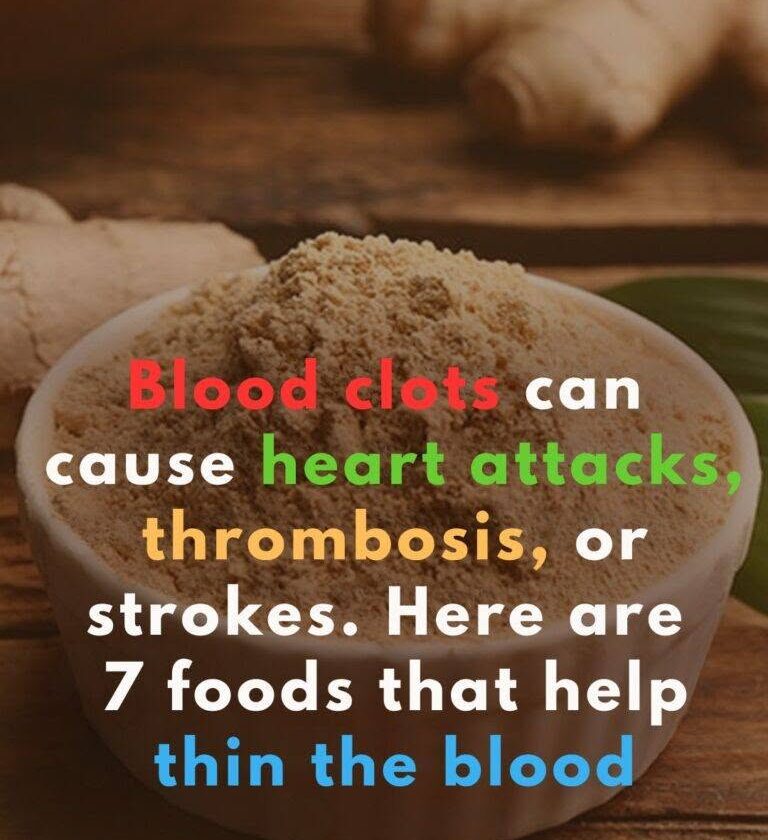
The phrase “blood-thinning foods” is misleading. No food can actually “thin your blood” in the way medications do (like anticoagulants). What some foods can do is slightly affect blood clotting or platelet activity, but the effects are usually mild and inconsistent.
Your blood’s clotting system is tightly regulated by the body, not dramatically changed by diet alone.
That said, here are 7 foods often linked with mild blood-thinning or circulation effects:
🧄 1. Garlic (garlic)
- May reduce platelet aggregation slightly
- Often studied for cardiovascular benefits
- Effect is mild compared to medication
🧅 2. Onions
- Contain compounds that may reduce clotting activity
- Also rich in antioxidants (quercetin)
🫚 3. Ginger
- May mildly reduce platelet stickiness
- Often used for nausea and inflammation too
🫐 4. Berries
- Blueberries, strawberries, etc.
- Rich in flavonoids that support blood vessel health
🥬 5. Leafy greens
- Help overall cardiovascular health
- BUT contain vitamin K, which actually supports clotting (important balance point)
🐟 6. Fatty fish
- Salmon, sardines
- Omega-3 fats may slightly reduce clotting tendency and inflammation
🌰 7. Nuts and seeds
- Especially walnuts and flaxseeds
- Support heart health and circulation
⚠️ Important reality check
- These foods do not replace blood-thinning medication
- They will not prevent serious clotting disorders on their own
- Effects are subtle and cumulative, not immediate
If someone is on prescription blood thinners (like warfarin or similar), sudden dietary changes can matter more than people think.
🧠 Bottom line
“Blood-thinning foods” really means:
👉 foods that may mildly support circulation and reduce platelet activity, not true medical blood thinners.
If you want, I can also explain which foods actually interfere with clotting medication (that’s where diet really matters clinically).