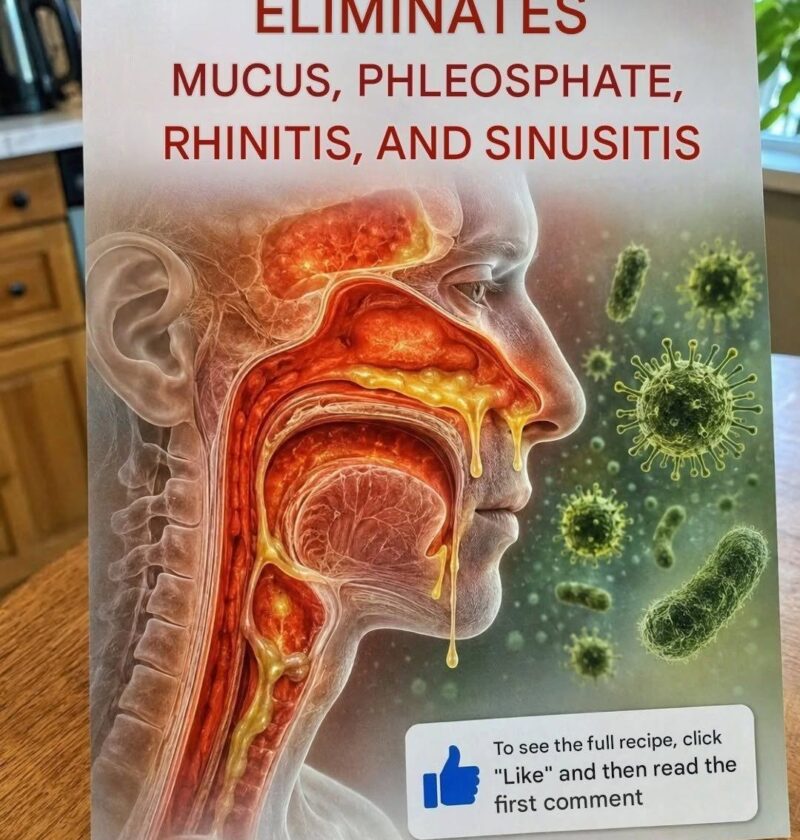
That kind of headline is classic clickbait—there’s no single “surprise” home remedy that reliably cures mucus, phlegm, and rhinitis for everyone. Those symptoms usually come from things like a cold, allergies, sinus irritation, or infections, and treatment depends on the cause.
That said, a few simple, evidence-supported home measures can genuinely help you feel better:
1. Saline (saltwater) nasal rinse or spray
This is one of the most effective ways to reduce nasal mucus and irritation. It helps physically flush out allergens and thick mucus.
2. Steam inhalation or warm showers
Warm, moist air can temporarily loosen mucus and make breathing easier. It doesn’t “cure” the cause, but it helps symptoms.
3. Staying well hydrated
Drinking water, warm tea, or broth helps thin mucus so it drains more easily.
4. Honey (for throat irritation and cough)
A teaspoon of honey can soothe throat discomfort and reduce cough frequency (not for children under 1 year).
5. Humidifying dry air
A humidifier can reduce nasal dryness and congestion, especially at night.
6. Avoiding triggers (for rhinitis/allergies)
Dust, smoke, perfumes, and pollen can worsen symptoms significantly.
When to be careful
You should consider medical advice if you have:
- Symptoms lasting more than 10–14 days
- High fever
- Severe facial pain or pressure
- Thick green/yellow discharge with worsening illness
- Shortness of breath or chest symptoms
If you want, tell me your exact symptoms (runny nose, blocked nose, cough, duration), and I can suggest a more targeted and practical routine.