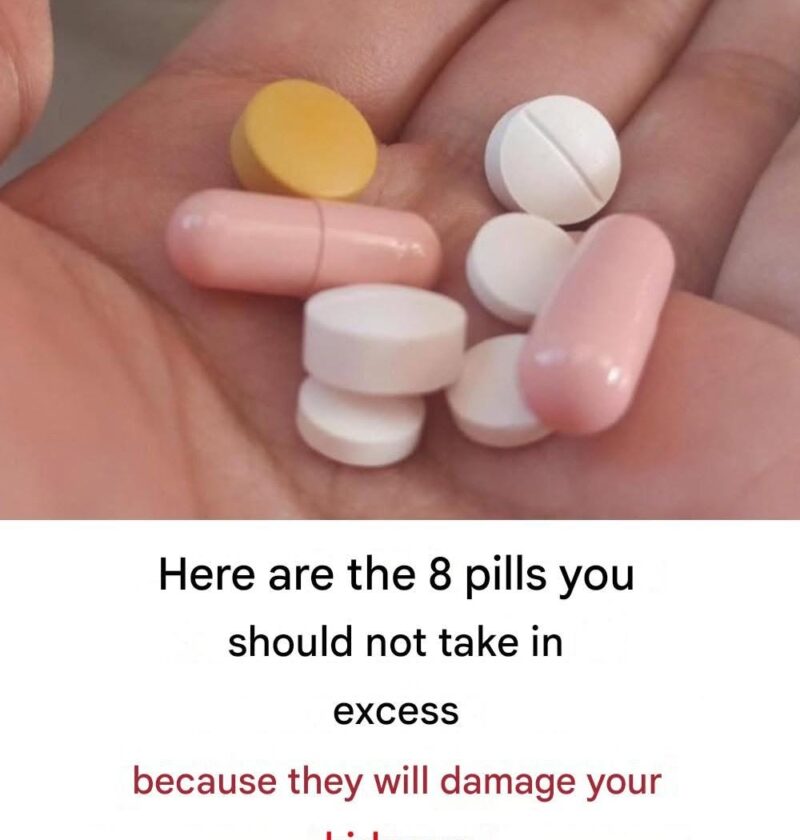
There isn’t a safe, universal list of “8 pills you should never take” because many medicines are safe when used correctly but can harm the kidneys in certain doses, durations, or people (especially those with dehydration, diabetes, or existing kidney disease).What matters most is how they’re used, not just the drug itself.That said, here are 8 common medicines/drugs that are known to potentially damage the kidneys if misused or used in high-risk situations:
1. NSAID painkillers (very common)
Examples: ibuprofen, diclofenac, naproxen
- Can reduce blood flow to kidneys
- Risk increases with long-term or high-dose use
- Especially risky if dehydrated or older
2. Aspirin (high doses)
- Low-dose aspirin (for heart protection) is usually safe
- High doses over time can stress kidneys
3. Certain antibiotics (aminoglycosides)
Examples: gentamicin, amikacin
- Can directly damage kidney filtering cells
- Usually used in hospitals with monitoring
4. Some blood pressure medicines (ACE inhibitors / ARBs)
Examples: enalapril, lisinopril, losartan
- Usually kidney-protective long-term
- But can temporarily worsen kidney function in dehydration or kidney artery disease
5. Diuretics (“water pills”)
Examples: furosemide, hydrochlorothiazide
- Can dehydrate the body
- Dehydration can strain kidneys if not balanced
6. Proton pump inhibitors (acid reducers)
Examples: omeprazole, esomeprazole
- Long-term use has been linked to kidney inflammation in some people
- Risk increases with prolonged use without medical need
7. Antiviral drugs (some types)
Example: acyclovir (especially high IV doses)
- Can crystallize in kidneys if hydration is poor
- Usually preventable with proper fluid intake
8. Lithium (used for mood disorders)
- Requires strict monitoring
- Narrow safety range
- Can cause chronic kidney damage over long-term use in some cases
Key takeaway
Most kidney damage from medicines happens because of:
- Long-term overuse
- High doses without supervision
- Dehydration
- Pre-existing kidney problems
- Mixing multiple drugs without guidance
When to be cautious
Be extra careful and consult a doctor if you:
- Take painkillers frequently
- Have diabetes or high blood pressure
- Notice swelling, fatigue, or reduced urine output
- Are using multiple medications daily
If you want, I can also list safer painkillers for kidneys or explain early signs of kidney damage you shouldn’t ignore.