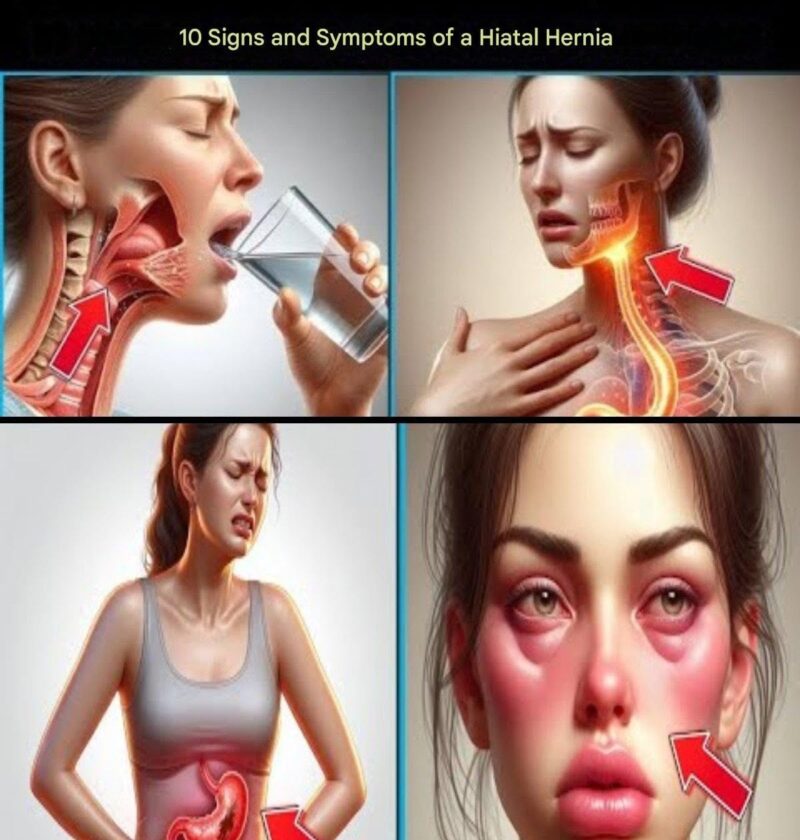
A hiatal hernia happens when part of the stomach pushes up through the diaphragm into the chest area. It’s more common than people think—and often causes symptoms that overlap with acid reflux.
Here are the most common signs and symptoms of a hiatal hernia:
🫁 1. Heartburn (burning chest sensation)
The most common symptom:
- Burning feeling behind the breastbone
- Worse after eating or lying down
- Often confused with acid reflux
🍽️ 2. Acid reflux (GERD symptoms)
Related to Gastroesophageal Reflux Disease:
- Sour taste in mouth
- Stomach acid coming up into throat
- Frequent burping or regurgitation
😮💨 3. Chest pain or discomfort
- Can feel like pressure or tightness
- Sometimes mistaken for heart problems (important to rule out)
🫃 4. Feeling full quickly
- Small meals feel “heavy”
- Bloating after eating
🤢 5. Nausea
- Especially after large meals or lying down
💨 6. Excessive burping or gas
- Air trapped in stomach
- Frequent belching
🛌 7. Worsening symptoms when lying down
- Reflux increases at night
- Can disturb sleep
😮 8. Difficulty swallowing (in some cases)
- Food feels stuck in chest or throat
- More common in larger hernias
🩸 9. Regurgitation
- Food or acid coming back up
- Can cause coughing or sore throat
😴 10. Shortness of breath or fatigue (less common)
- Large hernias can press on the diaphragm
- Can feel like not getting enough air
⚠️ Important reality check
A hiatal hernia:
- Is often small and symptom-free
- Is usually discovered during tests for reflux
- Does NOT always require surgery
🚨 When to see a doctor urgently
- Chest pain (to rule out heart issues)
- Trouble swallowing worsening
- Vomiting blood or black stools
- Severe or persistent symptoms
🧠 Simple summary
Most symptoms of a hiatal hernia are really due to:
👉 acid reflux + stomach movement into chest area
If you want, I can also explain:
- how to tell hiatal hernia vs heart attack symptoms
- or how diet and posture can significantly reduce symptoms without surgery
- or which foods make it worse and why