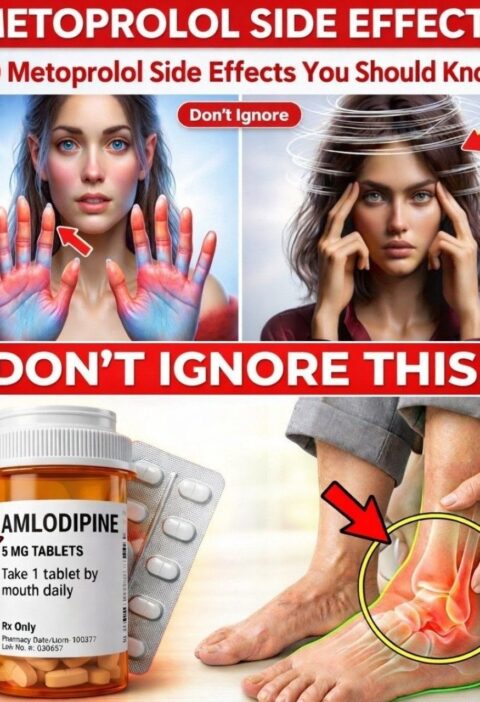
That headline is clickbait. There are no “secret side effects doctors pray you don’t discover.” The effects of Metoprolol are well-studied and routinely discussed with patients.
Here’s the real, evidence-based list of possible side effects:
Common (fairly expected)
- Fatigue or low energy
- Dizziness, especially when standing up
- Slow heart rate
- Cold hands and feet
- Mild nausea
Less common
- Sleep problems (vivid dreams, insomnia)
- Shortness of breath in sensitive people (like asthma/COPD)
- Reduced exercise tolerance
- Mood changes (sometimes low mood)
Rare but serious (need medical attention)
- Very slow heartbeat (bradycardia with fainting)
- Worsening heart failure (swelling, breathlessness)
- Severe low blood pressure
- Allergic reactions (rash, swelling, breathing difficulty)
Important context doctors emphasize
- It’s widely used because it reduces risk of heart attack, angina, and rhythm problems
- Side effects are often dose-dependent and manageable
- Stopping suddenly can be dangerous
Bottom line
Metoprolol isn’t a “hidden danger drug”—it’s a standard heart medication with known, monitored side effects. The scary wording is marketing, not medicine.
If you want, I can tell you how to tell normal adjustment symptoms vs warning signs that need urgent care.