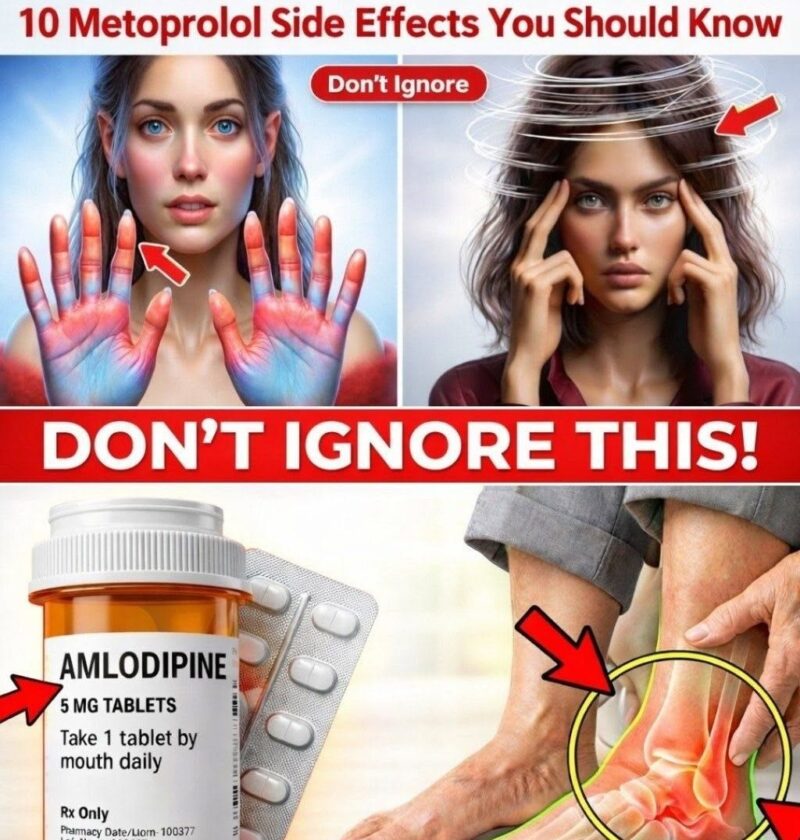
That headline is pure clickbait. No doctor is “praying you don’t discover” side effects—because they are well known, monitored, and managed.
Metoprolol is a widely used beta-blocker for blood pressure, heart rhythm problems, and heart protection after a heart attack. Like all medications, it can cause side effects, but most are predictable and not dangerous for most people.
Common side effects (the real ones doctors actually discuss)
1. Fatigue or low energy
Because the heart rate is slowed.
2. Dizziness or lightheadedness
Often when standing up quickly due to lower blood pressure.
3. Slow heart rate
Expected effect; doctors monitor this.
4. Cold hands and feet
Reduced circulation in extremities.
5. Shortness of breath (in some people)
More likely if someone has asthma or lung sensitivity.
6. Sleep disturbances or vivid dreams
Can occur in some users.
7. Mild depression or mood changes
Uncommon but reported.
8. Digestive discomfort
Nausea or stomach upset in some cases.
9. Reduced exercise capacity
You may tire faster during workouts.
10. Sexual side effects
Lower libido or erectile difficulties in some individuals.
🚨 Rare but important to watch for
Seek medical help if you experience:
- Very slow pulse with fainting
- Severe breathing difficulty
- Chest pain worsening
- Allergic reaction (rash, swelling)
🧠 Important context
- Many side effects improve after the body adjusts
- Dose matters a lot (higher dose = more effects)
- Doctors balance side effects against heart protection benefits
✔️ Bottom line
Metoprolol is not a “dangerous hidden side effect” drug—it’s a standard, well-studied medication. The key is monitoring and adjusting dose if needed, not fear-based headlines.
If you want, I can also explain which side effects are most likely to fade after 1–2 weeks vs. which ones mean you should call your doctor.