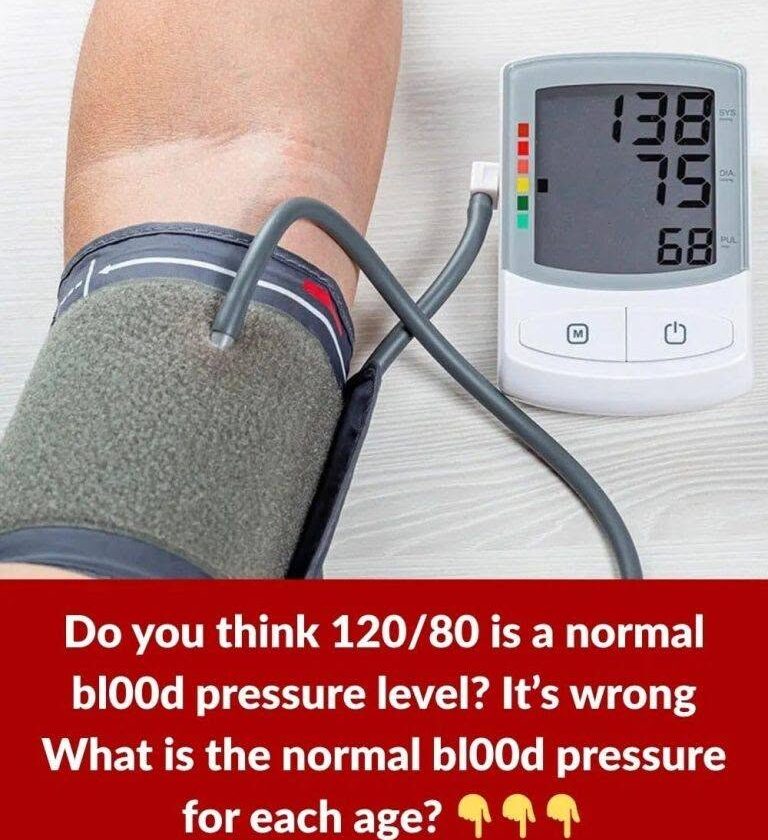
Blood pressure doesn’t have a perfect “one number per age,” but doctors do use typical ranges that change slightly as people grow older. The key idea is: healthy adults should generally stay under 120/80 mmHg, regardless of age.
Here’s a clear breakdown:
🧒 Children (1–12 years)
Blood pressure varies a lot with height and growth, but typical ranges are:
- Systolic: ~90–110 mmHg
- Diastolic: ~50–75 mmHg
🧑 Teenagers (13–18 years)
- Normal: ~110–120 / 65–80 mmHg
- Similar to adults by late teens
🧑💼 Adults (18–59 years)
- Normal: <120 / <80 mmHg
- Elevated: 120–129 / <80
- High blood pressure (hypertension): ≥130 / ≥80
👴 Older adults (60+ years)
- Common target: ~<130–140 / <80–90 mmHg (depending on health)
- Slightly higher systolic pressure can be seen due to artery stiffness
- Doctors often individualize targets for safety
⚠️ Important categories (all ages)
- Low blood pressure: <90 / 60 mmHg (may cause dizziness if symptomatic)
- Hypertensive crisis: >180 / >120 mmHg (medical emergency)
🧠 Key takeaway
- There is no “perfect number for each age,” only healthy ranges
- Lifestyle matters more than age alone
- One reading is not enough—trend matters
If you want, I can also explain what causes blood pressure to go high or low suddenly, or how to check it correctly at home (most people do it wrong).