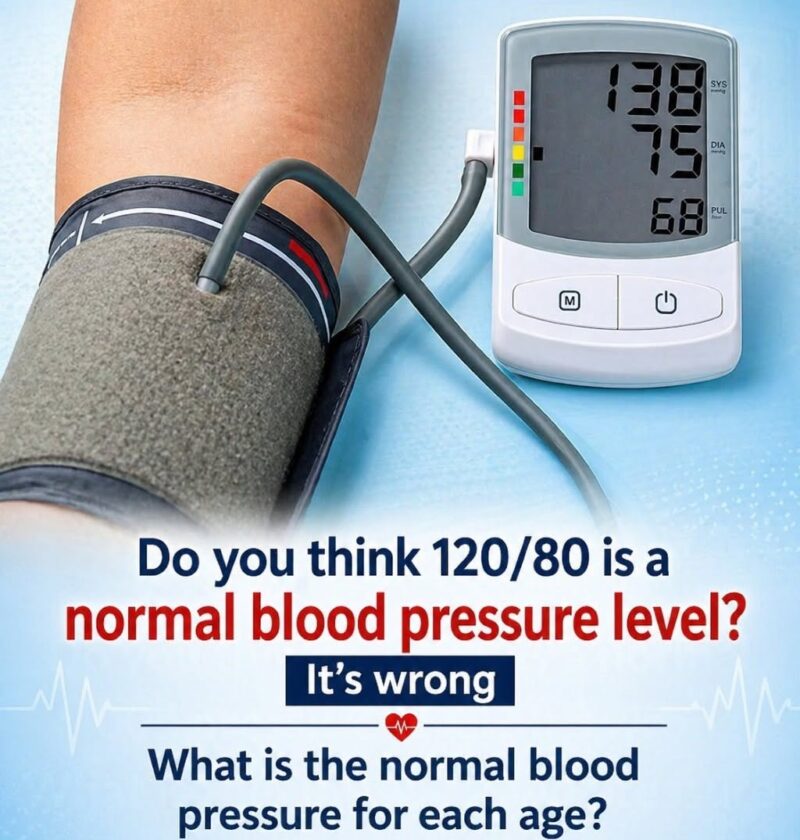
Blood pressure doesn’t have separate “perfect numbers” for every age in modern medicine anymore. For most adults, doctors use one general target, with small differences for children and older adults.
🩺 Normal Blood Pressure (General Guide)
Adults (18+)
- Normal: about <120 / <80 mmHg
- Elevated: 120–129 / <80
- High (Hypertension stage 1): 130–139 / 80–89
- High (Stage 2): ≥140 / ≥90
👉 Most healthy adults are aimed to stay below 120/80
👶 Children (general ranges vary by height/age)
- Newborns: ~60–90 / 20–60
- Infants (1–12 months): ~80–100 / 50–65
- Toddlers (1–5 years): ~90–105 / 55–70
- School-age (6–12 years): ~95–110 / 60–75
- Teens (13–17 years): ~105–120 / 65–80
👉 In children, doctors use percentiles (based on age, height, sex) rather than one fixed number.
👴 Older adults (60+)
- Often still considered normal if <120–129 / <80
- Some doctors allow slightly higher systolic (like up to 130–139) depending on:
- dizziness risk
- kidney health
- overall frailty
⚠️ Important points
- Blood pressure changes throughout the day (stress, activity, caffeine)
- One reading is not a diagnosis—multiple readings are needed
- “Normal” also depends on your personal health conditions
🧠 Simple takeaway
- Ideal for most adults: around 120/80 or lower
- Consistently 130/80 or above: worth checking with a doctor
- 180/120 or higher: emergency level
If you want, I can also explain how to correctly measure blood pressure at home so your readings are accurate (most people do it wrong without realizing).