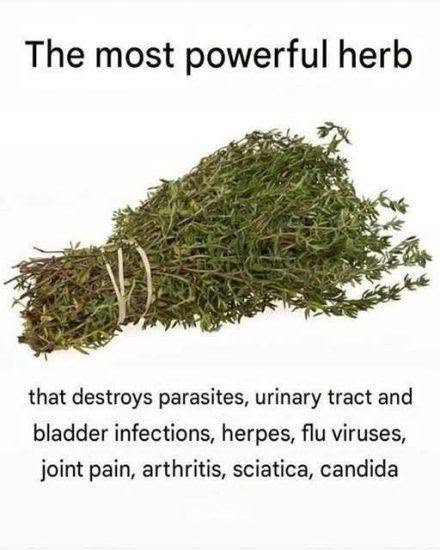
That headline is a classic example of overblown marketing claims. There is no single herb that can reliably “destroy parasites, cure urinary tract infections, eliminate herpes, and treat flu viruses” all at once.
Different conditions have very different causes:
- Parasites → treated with specific antiparasitic medicines
- UTIs → usually bacterial infections needing antibiotics
- Herpes → a lifelong viral infection managed with antivirals
- Flu → viral illness where treatment is mainly supportive (sometimes antivirals)
Herbs often misrepresented in such claims
Here are a few commonly promoted “potent herbs” and what evidence actually shows:
1. Garlic
- Has mild antimicrobial and antiviral properties in lab studies
- May support immune function
- Not a treatment for infections like herpes or UTIs
2. Oregano (oil/extract)
- Contains compounds with antimicrobial activity in vitro
- Very concentrated oil can irritate or be unsafe if misused
- Not proven to replace medical treatment
3. Ginger
- Can help with nausea and inflammation
- Some antiviral activity in early research
- Not a cure for infections
4. Turmeric
- Anti-inflammatory properties (curcumin)
- Studied for general immune modulation
- Poor bioavailability; effects are modest in real-world use
5. Echinacea
- Sometimes used for colds
- Evidence is mixed; may slightly reduce duration of symptoms in some cases
- Not effective against serious infections
Important reality check
- Herbs may support general health or mild symptoms.
- They do not replace medical treatment for infections.
- Claims of “curing multiple serious diseases at once” are not supported by clinical evidence.
When to be careful
Seek proper medical care for:
- Burning urination or suspected UTI
- Fever, severe fatigue, or flu symptoms lasting more than a few days
- Recurrent herpes outbreaks
- Any suspected parasitic infection
If you want, I can break down which natural remedies actually have solid evidence for immunity support vs. pure myths—there’s a big difference between the two.