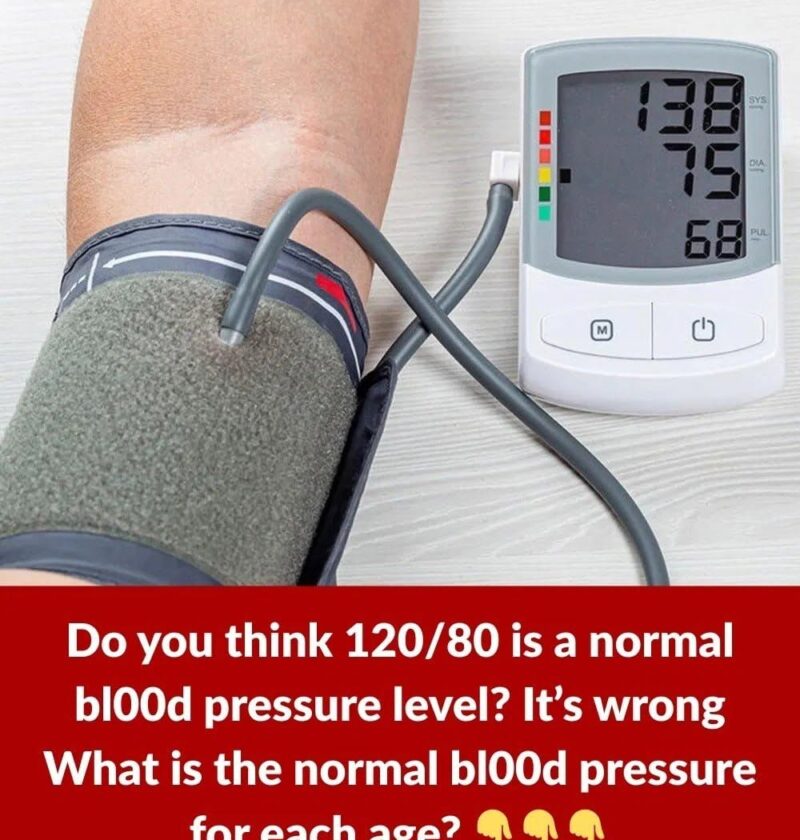
The idea that blood pressure has a completely different “normal” for every single age is a bit misleading. In modern medicine, the ideal target is mostly the same for adults, with only small variations for children and older adults.
First: what is “normal” blood pressure?
Blood pressure is written like: 120/80 mmHg
- Top number = systolic (pressure when heart beats)
- Bottom number = diastolic (pressure when heart rests)
General normal ranges by age group
🧒 Children
Normal varies by height and age, but roughly:
- 1–5 years: ~90–105 / 55–70
- 6–13 years: ~95–110 / 60–75
Doctors use percentile charts, not a fixed number.
🧑 Teenagers (14–18 years)
- Around 110–120 / 65–80
- Similar to adults as they approach adulthood
🧑 Adults (18–59 years)
- Normal: below 120/80
- Elevated: 120–129 / <80
- High blood pressure (Hypertension): 130/80 or higher
(defined by Hypertension guidelines)
👴 Older adults (60+ years)
- Often considered normal: 120–130 / 70–80
- Mildly higher systolic pressure can be common with aging due to stiffening arteries
- Doctors usually still aim for below 130/80 if tolerated
Key important truth
There is no special “safe high blood pressure for age” that is completely harmless. Risk of heart attack and stroke increases as pressure rises, even in older adults.
When blood pressure is dangerous
- Low blood pressure: below ~90/60 (if causing dizziness/fainting)
- High blood pressure emergency: 180/120 or higher
Bottom line
- “Normal” is basically around 120/80 for most adults
- Children have different ranges
- Older adults may have slightly higher readings, but targets are still controlled
If you want, I can also show you a simple chart of blood pressure categories (normal, prehypertension, stage 1, stage 2) so you can instantly understand any reading.