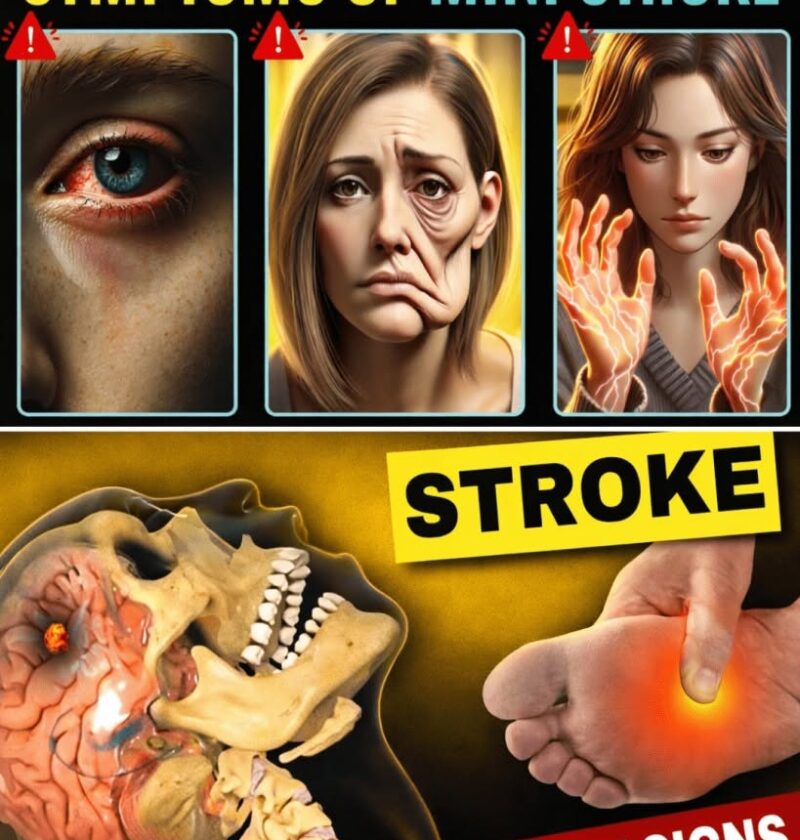
A Transient Ischemic Attack (TIA)—often called a “mini-stroke”—occurs when blood flow to part of the brain is temporarily blocked. Symptoms usually resolve within minutes to hours and leave no lasting damage, but a TIA is a serious warning sign that a full stroke may occur in the near future.
Here are 15 potential warning signs that people sometimes overlook:
- Sudden weakness on one side of the body
- An arm, leg, or side of the face may feel weak or heavy.
- Facial drooping
- One side of the face may sag or appear uneven when smiling.
- Numbness or tingling
- Especially if it affects only one side of the body.
- Difficulty speaking
- Slurred speech or trouble forming words.
- Trouble understanding language
- Difficulty comprehending what others are saying despite normal hearing.
- Sudden vision loss in one eye
- Sometimes described as a curtain or shade coming down over the eye.
- Double vision
- New-onset diplopia can be a warning sign of reduced blood flow to certain brain regions.
- Blurred vision
- Temporary visual disturbances that come and go.
- Sudden dizziness
- Especially when accompanied by other neurological symptoms.
- Loss of balance or coordination
- Unexpected stumbling or difficulty walking.
- Confusion
- A sudden inability to think clearly or follow conversations.
- Severe, unexplained headache
- Less common with TIAs but can occur, particularly with certain vascular conditions.
- Difficulty swallowing
- New trouble swallowing food, liquids, or saliva.
- Sudden clumsiness
- Dropping objects or having trouble with fine motor tasks.
- Brief episodes that quickly resolve
- Symptoms lasting only a few minutes are sometimes dismissed, but temporary symptoms are a hallmark of TIA.
When to Seek Emergency Care
Even if symptoms disappear completely, a TIA should be treated as a medical emergency. Call emergency services immediately if you notice symptoms consistent with the FAST warning signs:
- Face drooping
- Arm weakness
- Speech difficulty
- Time to call emergency services
Important Note
Many of these symptoms can also be caused by other conditions, such as migraines, seizures, low blood sugar, or inner-ear disorders. However, because a TIA can precede a stroke, any sudden neurological symptom warrants prompt medical evaluation.
If you’re asking because you or someone else is currently experiencing any of these symptoms—or had them within the last few days—seek urgent medical attention immediately, even if the symptoms have resolved.