Here’s the safe, accurate way to understand them:
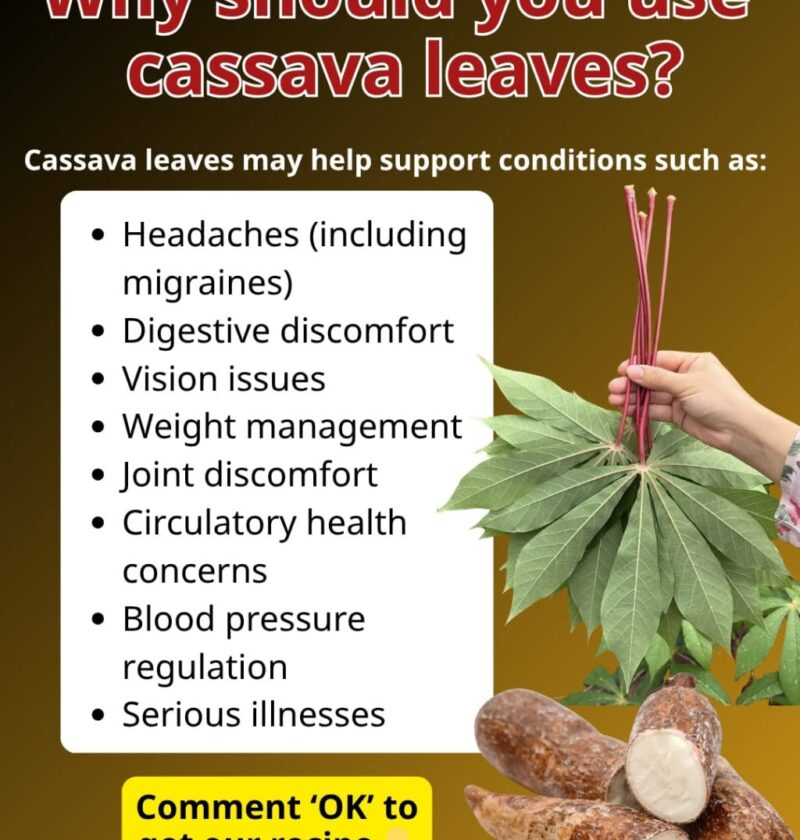
🌿 What are cassava leaves?
Cassava leaves come from the cassava plant (also called manioc). They are eaten in parts of Africa and Asia and are rich in:
- protein (for a leaf)
- iron
- vitamin A and C
But they also contain natural cyanogenic compounds that can release cyanide if not prepared properly.
⚠️ Important safety warning
Raw cassava leaves are toxic if not processed correctly.
They must be:
- thoroughly boiled
- cooked long enough
- and sometimes boiled multiple times with water discarded
🍲 How cassava leaves are traditionally prepared (safe method)
✔ Step 1: Wash thoroughly
Remove dirt, stems, and tough parts.
✔ Step 2: Crush or finely chop
This helps break down fibers for even cooking.
✔ Step 3: Boil properly
- Boil in plenty of water
- Cook for at least 15–30 minutes (sometimes longer depending on recipe)
- Discard the boiling water if traditional detox methods are used
✔ Step 4: Cook in a dish
After boiling, they are often cooked with:
- onions
- garlic
- oil or coconut milk
- fish or meat (in some cuisines)
🧠 Why proper cooking matters
Cassava leaves contain compounds that can release hydrogen cyanide. Proper boiling:
- reduces toxicity
- makes them safe to eat
- improves digestibility
🍛 Where they are commonly eaten
- West and Central Africa (stews and sauces)
- Indonesia (gulai daun singkong)
- parts of the Caribbean
🚫 What NOT to do
- Don’t eat raw cassava leaves
- Don’t lightly sauté without boiling first
- Don’t use “quick raw smoothies” or similar viral claims
🧠 Bottom line
Cassava leaves are nutritious but must be properly boiled and fully cooked to be safe. The “secret viral method” claims are usually incomplete and can be dangerous.
If you want, I can share a traditional cassava leaf recipe (African or Indonesian style) that is both safe and tasty.