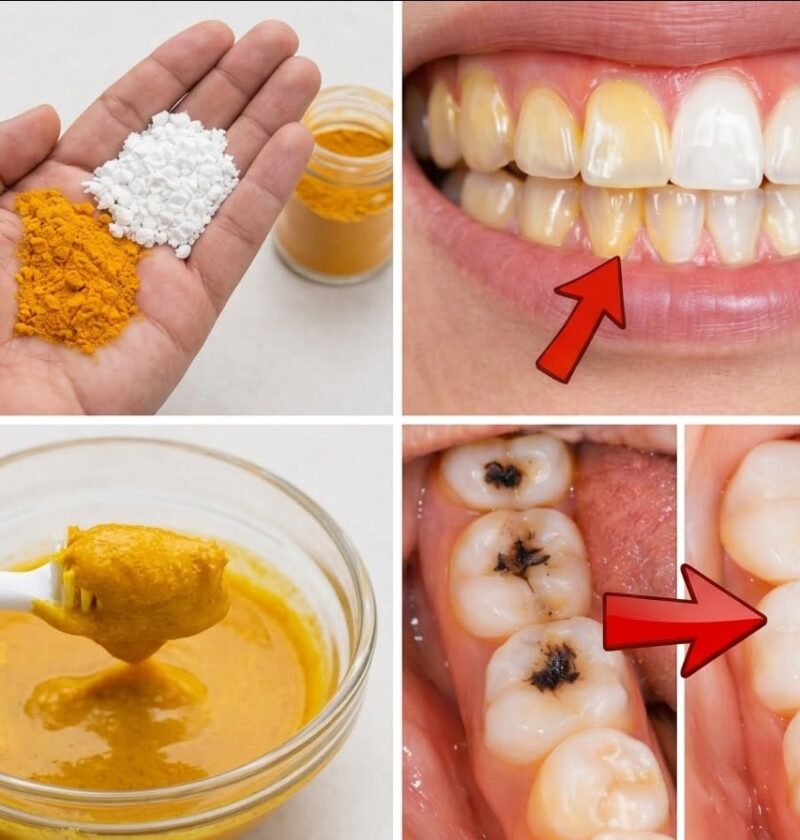
Short answer: no—turmeric does not whiten teeth in a true medical sense, and the “check the comments” style claims are usually social media hype.
What turmeric actually does
Turmeric contains curcumin, which has anti-inflammatory and mild antimicrobial properties. Because of this, some people use it for oral health routines like “oil pulling” or DIY toothpaste.
Does it whiten teeth?
- No strong scientific evidence shows turmeric whitens enamel.
- It does not remove deep stains like professional whitening treatments.
- In some cases, it may even temporarily stain the surface of teeth or gums yellow (because it is a strong pigment).
Why people think it works
- After brushing with turmeric, teeth may feel smoother (like after any abrasive cleaning).
- Plaque removal can make teeth look slightly brighter temporarily.
- Social media “before and after” photos are often misleading (lighting, filters, or normal cleaning effects).
Possible downsides
- Can stain toothbrushes, sinks, and sometimes dental restorations
- DIY abrasive pastes (including turmeric mixes) may contribute to enamel wear if used frequently
- Not a substitute for fluoride toothpaste
What actually works for whitening
- Professional dental whitening (most effective)
- Whitening toothpaste with approved abrasives or peroxide
- Regular brushing + flossing to prevent surface stains
- Limiting staining foods/drinks (tea, coffee, tobacco)
Bottom line
Turmeric is fine as a spice and may support general oral hygiene, but it is not a proven teeth-whitening treatment.
If you want, I can compare natural methods vs dentist whitening options so you can see what actually works and what doesn’t.