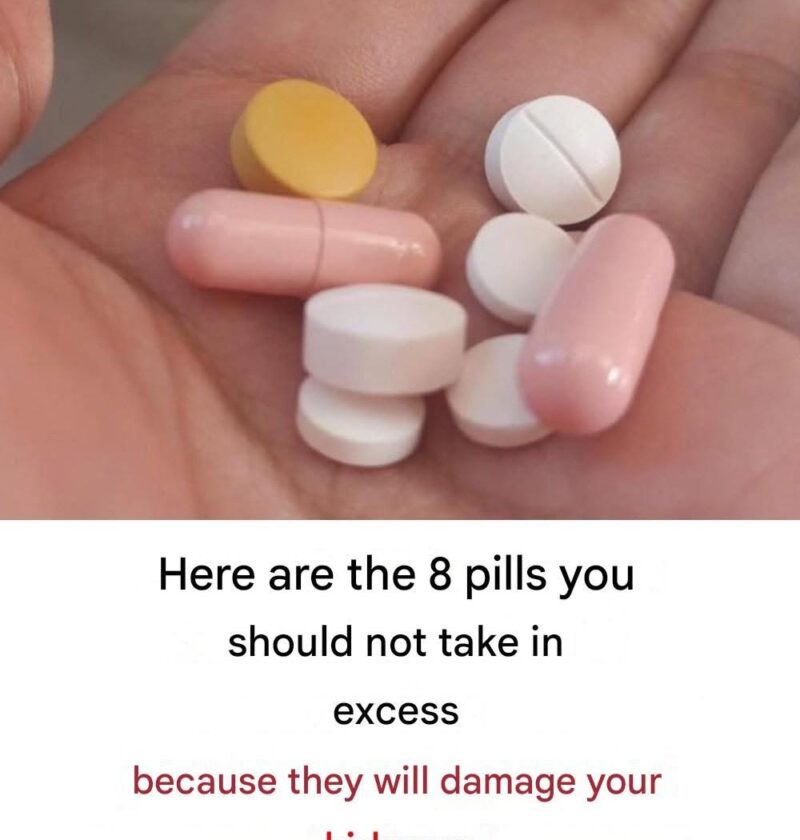
That headline is oversimplified. There aren’t “eight pills you should never take,” because kidney risk depends on dose, duration, hydration, age, and existing kidney health. Still, some commonly used medications can stress or damage the kidneys if misused or taken long-term without monitoring.
Here are 8 medication types that deserve caution for kidney health, especially in older adults or people with Chronic kidney disease:
1. NSAID painkillers (very important)
Examples: ibuprofen, diclofenac, naproxen
These reduce blood flow to the kidneys if used frequently or in high doses.
Risk increases with:
- Dehydration
- Older age
- Existing kidney disease
2. Certain antibiotics
Examples: aminoglycosides (like gentamicin)
Can be effective but may:
- Stress kidney filtration
- Require blood level monitoring in hospitals
3. Diuretics (“water pills”)
Used for blood pressure and swelling
Examples:
- Furosemide
- Hydrochlorothiazide
Risk:
- Dehydration if overused
- Electrolyte imbalance affecting kidney function
4. ACE inhibitors / ARBs (blood pressure meds)
Examples:
- Lisinopril
- Losartan
Important note:
These are kidney-protective in many patients, but:
- Can worsen kidney function in dehydration or advanced disease if not monitored
5. Proton pump inhibitors (acid reducers)
Examples:
- Omeprazole
- Esomeprazole
Long-term use has been linked (in some studies) to:
- Higher risk of kidney inflammation
- Chronic kidney injury in rare cases
6. Lithium (psychiatric medication)
Used for bipolar disorder
Long-term use may:
- Reduce kidney concentrating ability
- Lead to chronic kidney damage in some cases
Requires regular blood monitoring.
7. Contrast dye (used in scans)
Not a pill, but often overlooked
Used in CT scans/angiography, it can:
- Temporarily reduce kidney function in high-risk patients
8. High-dose vitamin or herbal supplements (misused)
Examples:
- Excess vitamin D or A
- Unregulated herbal mixtures
Risk:
- Kidney stress from calcium imbalance or toxins
- Unknown interactions with medications
Key reality check
Most of these drugs are safe when properly prescribed and monitored. The real danger is:
- Self-medication
- Long-term overuse
- Ignoring kidney function tests
Warning signs of kidney stress
Seek medical advice if you notice:
- Swelling in legs or face
- Reduced urine output
- Fatigue or nausea
- Foamy urine