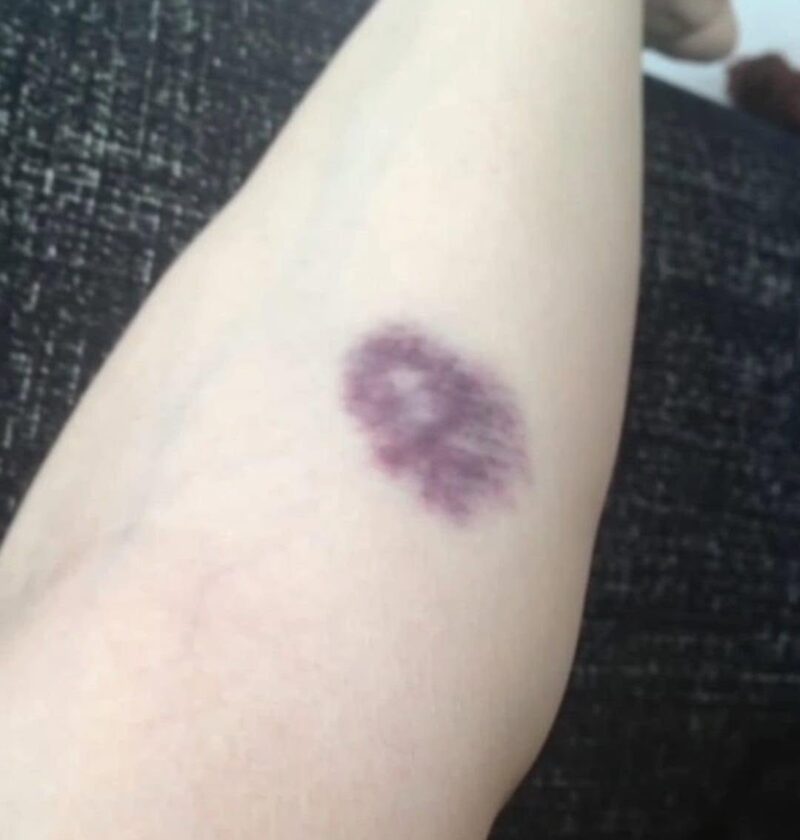
Bruises on the body do not automatically mean cancer. Most bruises are caused by minor injuries that people may not even remember.
That said, unexplained bruising can sometimes be a sign of an underlying medical issue and should not be ignored if it is persistent or unusual.
🩹 Common reasons for bruising
- Bumping into objects
- Aging skin (skin and blood vessels become more fragile)
- Blood-thinning medications
- Aspirin use
- Intense exercise
⚠️ When bruising may deserve medical attention
Consider seeing a healthcare professional if you have:
- Frequent bruises without obvious injury
- Very large bruises
- Bruises that appear in unusual locations
- Bruising along with frequent nosebleeds or bleeding gums
- Persistent fatigue, fever, or unexplained weight loss
🩺 Possible medical causes
Unusual bruising can be associated with:
- Vitamin deficiencies (such as vitamin C or vitamin K deficiency)
- Liver disease
- Platelet disorders
- Certain medications
- Blood-related cancers such as some forms of Leukemia (much less common than the causes above)
🚨 Important reality check
Cancer is not the most likely explanation for a new bruise. The vast majority of bruises are benign and related to minor trauma or medications.
Bottom line
A headline saying:
“If you get these bruises, it means you have cancer”
is false. Bruising can have many causes, and while persistent unexplained bruising warrants medical evaluation, it is not a diagnosis of cancer.
If you describe:
- Your age,
- Where the bruises are,
- Whether they appeared after an injury,
- Any medications you’re taking,
I can help explain what causes are most likely.