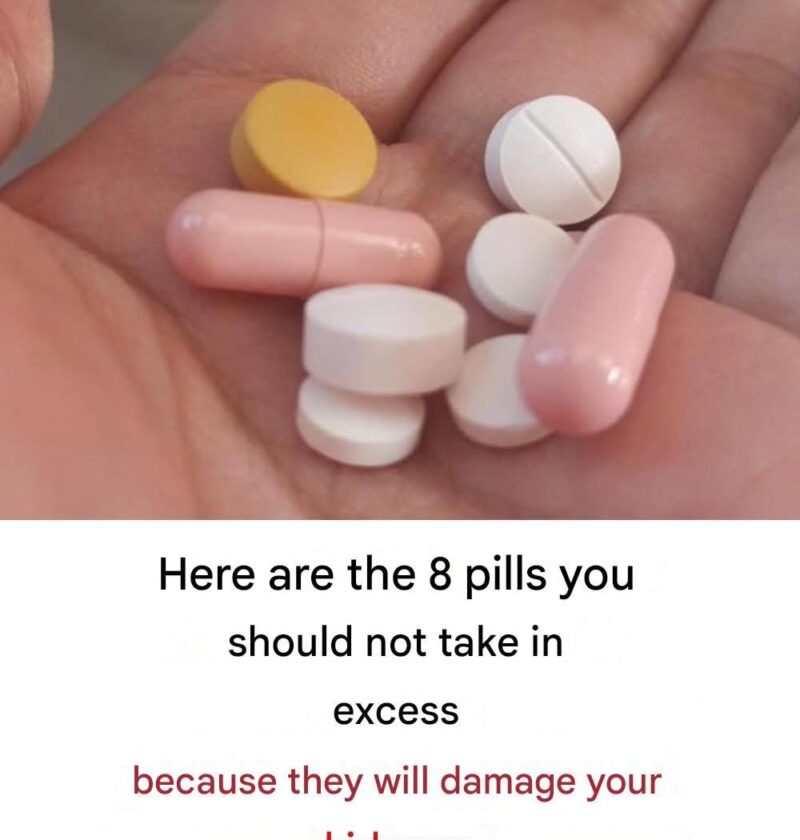
Headlines like “Eight pills you shouldn’t take because they damage your kidneys” are usually oversimplified and can be misleading. The reality is: most medicines are safe for the kidneys when used correctly, but some can cause harm in certain situations—especially with high doses, long-term use, dehydration, or existing kidney disease.
Here are medication types that are known to require caution:
💊 1. NSAID painkillers
Examples:
- ibuprofen
- naproxen
- diclofenac
These can reduce blood flow to the kidneys, especially if:
- taken in high doses
- used long-term
- combined with dehydration or kidney disease
💊 2. Certain antibiotics
Some antibiotics can affect kidney function, especially in higher doses or vulnerable people, such as:
- aminoglycosides (e.g., gentamicin)
- vancomycin (requires monitoring)
💊 3. Contrast dyes (used in scans)
Iodinated contrast media used in CT scans can sometimes stress the kidneys, especially in people with pre-existing kidney disease or dehydration.
💊 4. Lithium (for mood disorders)
Lithium can affect kidney function over long-term use and requires regular monitoring.
💊 5. Certain blood pressure medicines (in specific situations)
Drugs like ACE inhibitors or ARBs (e.g., lisinopril, losartan) can slightly change kidney function initially but are often protective long-term when properly monitored.
💊 6. Proton pump inhibitors (long-term use)
Medicines for acid reflux (like omeprazole) have been linked in some studies to rare kidney issues when used long-term without medical supervision.
💊 7. Some antiviral or chemotherapy drugs
Certain stronger treatments can stress kidneys and are always closely monitored in medical care.
💊 8. Herbal or “natural” supplements
Not always labeled as “pills,” but important:
- Some traditional remedies or high-dose supplements can harm kidneys due to contamination or toxic compounds.
🧠 Key reality check
No medication is “universally kidney-damaging.” Risk depends on:
- dose
- duration
- hydration status
- existing conditions (like diabetes or hypertension)
- combination with other drugs
🚨 When kidney risk is higher
Be more careful if you have:
- diabetes
- high blood pressure
- older age
- dehydration or vomiting/diarrhea
- known kidney disease
✔️ Bottom line
The “eight pills” lists online are usually designed for shock value. In real medicine, benefits often outweigh risks when drugs are used correctly and monitored.
If you want, tell me the list you saw—I can break down each one and explain which warnings are real and which are exaggerated.