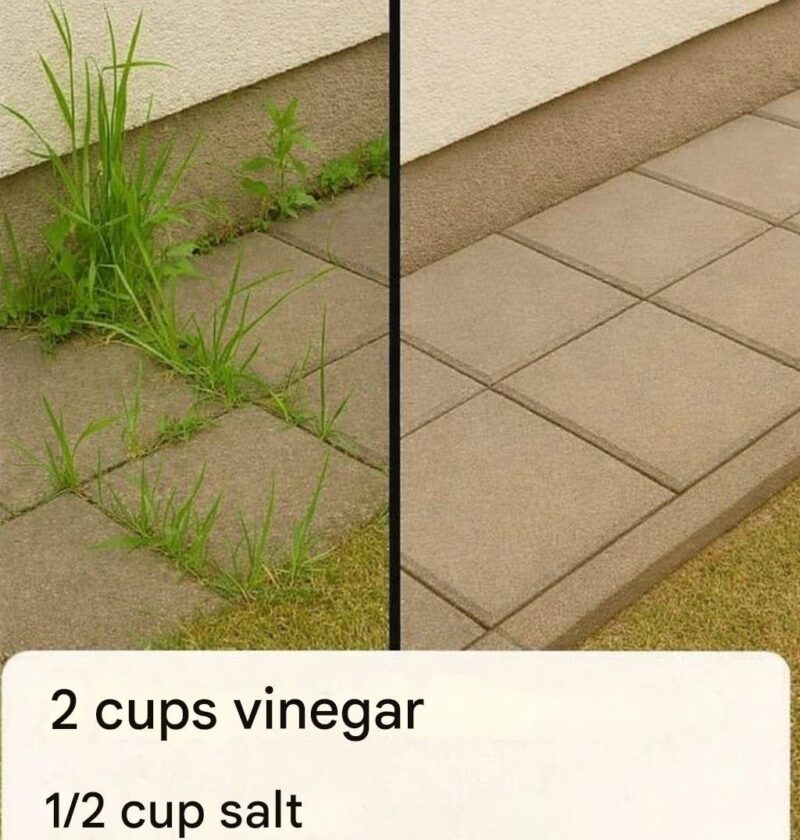
A “super effective homemade herbicide” can sound appealing, but most DIY weed killers are actually non-selective contact herbicides—they burn whatever they touch rather than safely targeting only weeds. That means they can also damage soil, nearby plants, and sometimes make weeds grow back stronger.
Here’s what’s realistic and safe to know:
🧪 Common homemade weed killer (works, but with limits)
1) Vinegar-based spray
- White vinegar (acetic acid)
- A few drops of dish soap
How it works:
- The acid dries out leaves
- Soap helps it stick
Reality:
- Works best on young, small weeds
- Often kills leaves but not deep roots
- Weeds usually regrow
2) Salt solution (⚠️ use carefully)
- Salt + water + sometimes vinegar
Reality:
- Can kill weeds more strongly
- But it:
- Damages soil for a long time
- Makes the area hard for any plants to grow later
This is why gardeners often avoid it.
3) Boiling water
- Pour directly onto weeds
Reality:
- Very effective on sidewalks, cracks, driveways
- Safe and chemical-free
- Still may not kill deep roots
⚠️ What these DIY methods don’t do
They are not:
- Selective (they don’t target only weeds)
- Long-term root killers
- As effective as commercial herbicides for stubborn weeds
🌱 Why weeds often come back
Weeds survive because:
- Roots remain underground
- Seeds stay in soil for years
- Some regenerate quickly after surface damage
🧠 Safer, more effective approach
For lasting weed control:
- Pull weeds after rain (easier root removal)
- Use mulch to block sunlight
- Maintain regular trimming
- Use targeted herbicides only when necessary
🚫 Important warning
Be careful with mixing household chemicals:
- Never mix bleach, ammonia, or unknown cleaners
- Can produce toxic fumes
✔️ Bottom line
- Vinegar, salt, and boiling water can kill weeds temporarily
- None are truly “super effective” long-term solutions
- The most reliable control is root removal + prevention
If you tell me where the weeds are (garden, lawn, driveway), I can suggest the best method for that specific situation.