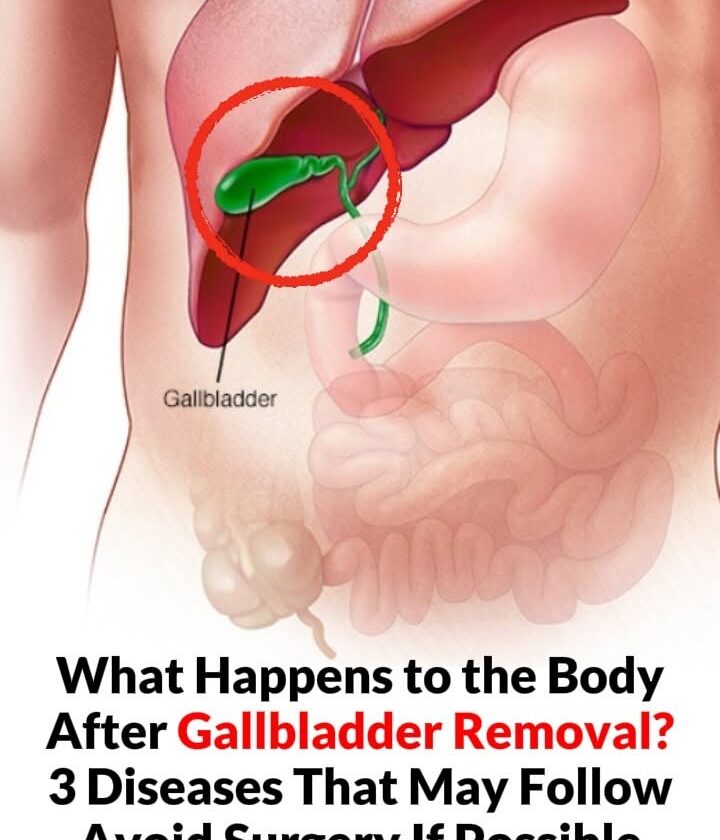
That headline is misleading. It mixes a real surgery with exaggerated fear.
Gallbladder removal (cholecystectomy) is one of the most common and generally safe surgeries. Most people live completely normal lives afterward.
The gallbladder’s job is to store bile (which helps digest fat). After removal, bile flows directly from the liver into the intestine.
🧠 What actually happens after gallbladder removal
After surgery, the body:
- Still produces bile normally (from the liver)
- Releases bile continuously instead of in “stored bursts”
- Gradually adapts over weeks to months
Most people feel fine long-term.
⚠️ Possible issues after surgery (not “3 diseases you will get”)
1) Post-cholecystectomy diarrhea
Some people get loose stools, especially after fatty meals.
Related condition: Postcholecystectomy syndrome
Usually:
- Mild
- Temporary
- Improves with diet changes
2) Bile reflux / indigestion
A small number of people may experience:
- Bloating
- Heartburn-like symptoms
- Mild upper abdominal discomfort
3) Fat digestion changes
Some people initially struggle with:
- Greasy foods
- Large meals
This is usually managed by:
- Smaller meals
- Lower-fat diet (especially early after surgery)
🚫 Myths about “dangerous diseases after surgery”
Some articles wrongly suggest gallbladder removal causes serious diseases. There is no strong medical evidence that it directly causes major chronic diseases in most people.
In fact, surgery is usually recommended when risks of keeping the gallbladder are higher, such as:
- Gallstones causing pain
- Infection (cholecystitis)
- Blocked bile ducts
Related condition: Cholelithiasis
👍 Benefits of surgery (often overlooked)
For many patients, removal leads to:
- No more gallstone attacks
- No emergency pain episodes
- Reduced risk of gallbladder infection
🧠 Bottom line
- Life after gallbladder removal is usually normal
- Some people have temporary digestion changes
- Serious long-term problems are uncommon
- Surgery is typically done because the gallbladder problem itself is more dangerous than removing it
If you want, tell me whether you’re considering surgery or already had it—I can explain diet and recovery tips specific to your situation.