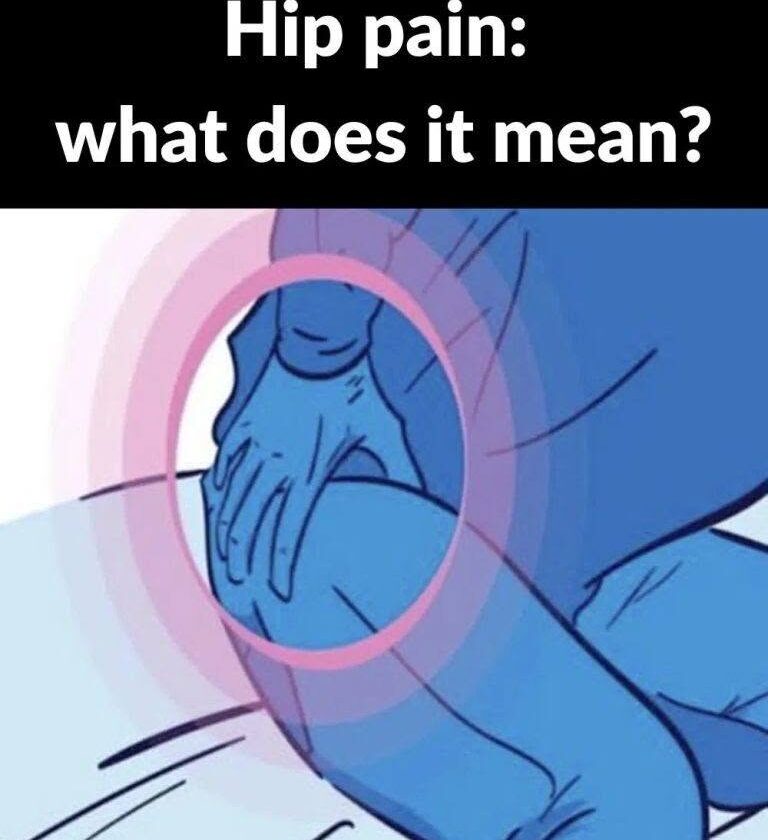
Hip pain is a symptom, not a diagnosis. It can come from the hip joint itself or from nearby structures such as muscles, tendons, nerves, or even the lower back.
Common causes of hip pain
- Osteoarthritis: The most common cause in older adults. Pain and stiffness often worsen with activity and improve with rest.
- Hip bursitis: Causes pain on the outside of the hip, especially when lying on that side.
- Muscle or tendon strain: Often follows exercise, lifting, or an awkward movement.
- Sciatica: Pain from the lower back can radiate into the hip and leg.
- Hip fracture: More common after a fall, particularly in older adults or people with osteoporosis.
- Rheumatoid arthritis: Can cause pain, swelling, and morning stiffness.
- Hip labral tear: More common in athletes or after an injury.
The location of the pain can provide clues
- Front of the hip or groin: Often points to a problem within the hip joint, such as arthritis or a labral tear.
- Outside of the hip: More commonly due to bursitis or tendon problems.
- Back of the hip or buttock: May be related to the lower back, sciatica, or muscles.
When to seek urgent medical care
Seek prompt medical attention if hip pain is accompanied by:
- Inability to stand or bear weight
- Severe pain after a fall or injury
- A visibly deformed leg or hip
- Fever, redness, or warmth around the joint
- Sudden severe swelling
- Numbness or weakness in the leg
Self-care for mild hip pain
If the pain is mild and not due to a major injury, you can often try:
- Resting from activities that worsen the pain
- Applying ice for the first 24–48 hours after an injury
- Gentle stretching and gradual return to activity
- Using over-the-counter pain relievers if they’re appropriate for you and you have no medical reason to avoid them
Bottom line
Hip pain has many possible causes, ranging from a simple muscle strain to conditions that require medical treatment. If the pain is severe, persists for more than a few days, keeps returning, or limits your ability to walk or perform daily activities, it’s a good idea to see a healthcare professional for an evaluation.