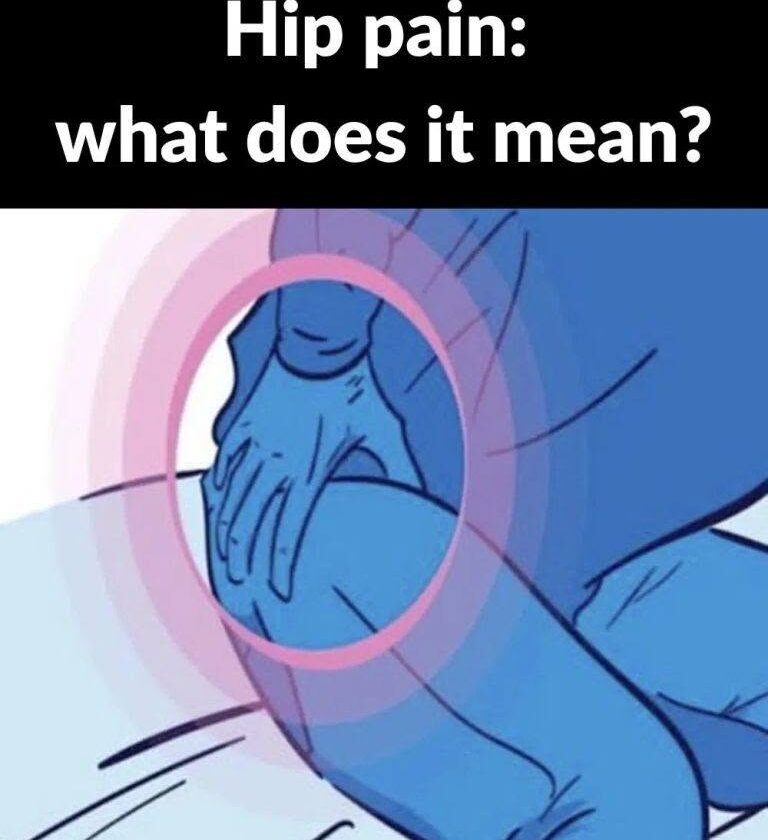
Hip pain can mean a lot of different things because the hip is a large, weight-bearing joint involving bone, cartilage, muscles, tendons, and nerves. The meaning depends on where the pain is, how it feels, and what triggers it.
Here are the most common causes:
1. Wear-and-tear arthritis
One of the most common causes is Osteoarthritis.
- Pain is usually deep in the groin or front of the hip
- Worse with walking, standing, or climbing stairs
- Often comes with stiffness, especially in the morning
2. Muscle or tendon strain
Overuse, heavy lifting, or sudden movement can strain hip muscles or tendons.
- Sharp or aching pain after activity
- Tenderness when pressing the area
- Usually improves with rest
3. Bursitis (inflamed cushioning sacs)
Trochanteric bursitis is common around the outer hip.
- Pain on the outside of the hip
- Worse when lying on that side
- Often sore when walking or climbing stairs
4. Nerve-related pain (sciatica)
Irritation of the lower back nerves can send pain to the hip.
- Sharp, shooting pain from back to leg
- May include tingling or numbness
- Often worse when sitting
5. Inflammatory arthritis
Conditions like Rheumatoid Arthritis can also affect the hip.
- Persistent pain with swelling and stiffness
- Morning stiffness lasting longer than 30–60 minutes
- May affect other joints too
6. Hip joint injury or labral tear
- Clicking, locking, or catching sensation
- Pain deep in the groin
- Often worsens with twisting movements
When to be more concerned
You should get checked soon if:
- Pain lasts more than 2–3 weeks
- You have trouble walking or bearing weight
- Pain wakes you up at night
- There’s swelling, fever, or sudden severe pain
If you want, describe where exactly your hip hurts (front, side, or back), when it started, and what makes it worse, and I can narrow it down more precisely.