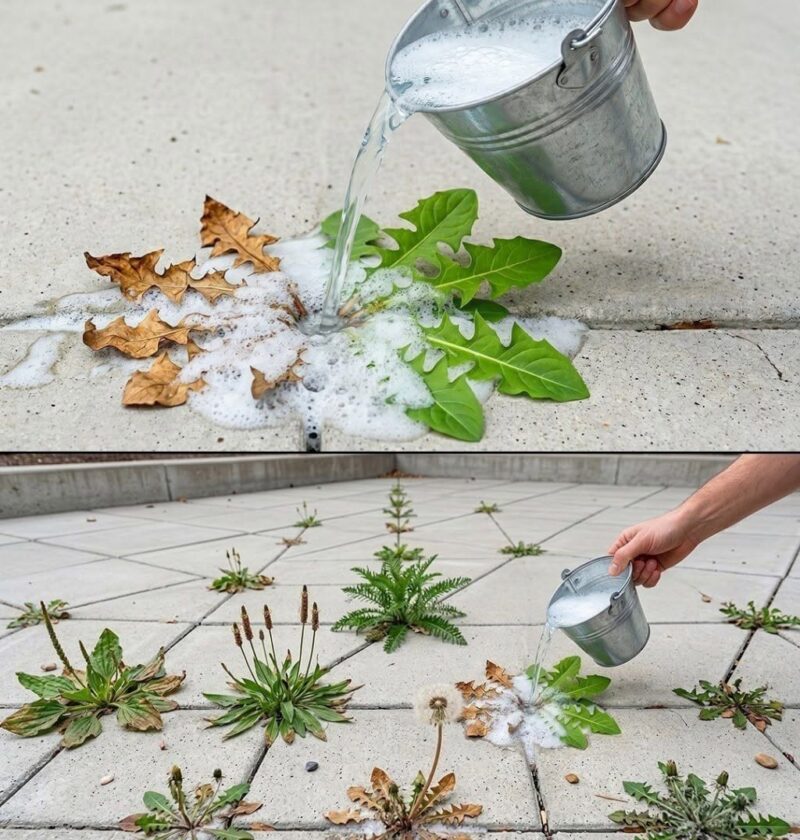
That headline is a classic clickbait gardening teaser. It usually ends with something like, “…but then he was amazed when the weeds disappeared!”
The substance being poured is often one of these:
- Boiling water – Can kill small weeds by damaging their leaves and stems. It’s most effective on weeds growing in cracks in driveways or sidewalks.
- White vinegar – The acetic acid can burn the above-ground parts of weeds, especially on sunny days. It works best on young weeds but may not kill the roots.
- A vinegar + dish soap mixture – The soap helps the vinegar stick to the leaves. This is a common DIY weed spray.
- A vinegar + salt + dish soap mixture – While effective at killing vegetation, salt can remain in the soil and prevent desirable plants from growing, so it’s generally not recommended for garden beds.
What actually works best?
The most effective method depends on where the weeds are:
- Garden beds: Pull weeds by the roots, use mulch to suppress new growth, and remove weeds before they set seed.
- Driveways and sidewalks: Boiling water or a vinegar-based spray can be useful for small weeds.
- Large or persistent infestations: Repeated treatment or other weed-control methods may be needed.
Bottom line
There’s no miracle liquid that permanently eliminates weeds. Many homemade remedies can kill the visible parts of weeds, but deep-rooted or perennial weeds often grow back unless the roots are removed or repeatedly treated. The best approach depends on the type of weed and where it’s growing.