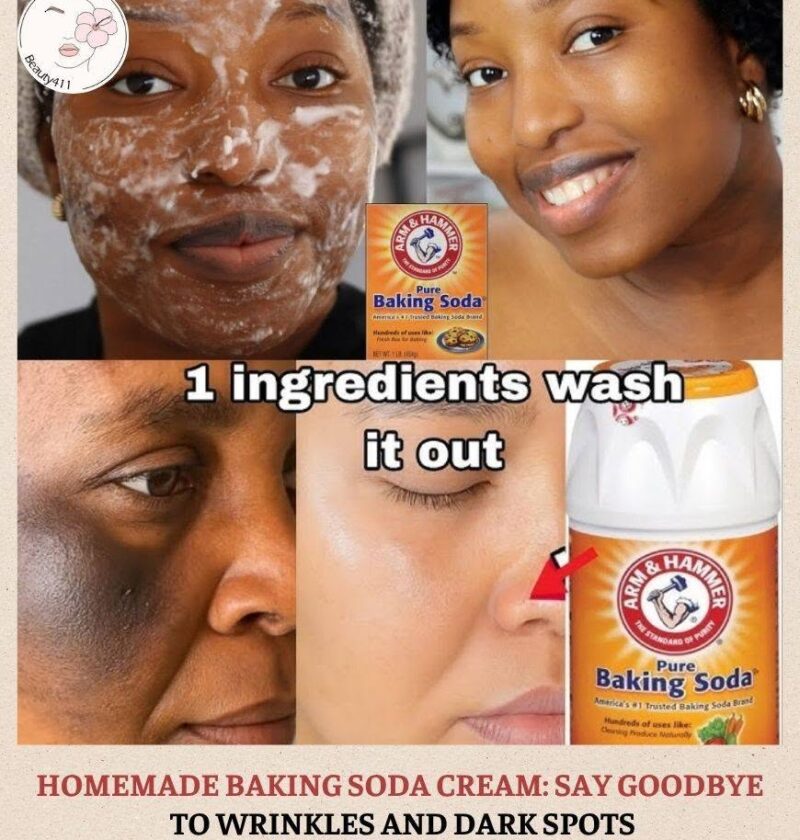
That claim is misleading.
Baking soda cannot erase age spots or give “flawless skin.” It’s often promoted in viral “natural beauty hacks,” but dermatology evidence does not support it for treating pigmentation.
🧴 What age spots actually are
Age spots (also called sun spots or liver spots) are areas of increased pigmentation caused mainly by sun exposure over time. Medically, they’re a form of solar lentigines, part of the broader category of skin pigmentation changes.
⚠️ Why baking soda is NOT a good treatment
Baking soda is:
- Highly alkaline (skin prefers slightly acidic pH)
- A mild abrasive
What it can do:
- Temporarily remove surface oils or dead skin
- Make skin feel “smoother” briefly
What it cannot do:
- Remove melanin buildup in deeper skin layers
- Fade true age spots
- Improve long-term pigmentation issues
Risks:
- Skin irritation
- Dryness and peeling
- Damage to skin barrier
- Increased sensitivity to sunlight (which can worsen spots)
🧠 Why the myth spreads
People see short-term effects like:
- Brighter-looking skin after exfoliation
- Slight fading due to irritation or peeling
Then assume it “removed” pigmentation—but it’s temporary and can backfire.
🌞 What actually works for age spots
✔️ 1. Sun protection (most important)
- Daily sunscreen SPF 30+
- Prevents new spots and darkening of existing ones
✔️ 2. Dermatologist-approved ingredients
These have real evidence for fading pigmentation:
- Retinoids (vitamin A derivatives)
- Vitamin C serums
- Niacinamide
- Azelaic acid
✔️ 3. Professional treatments
- Chemical peels
- Laser therapy
- Cryotherapy (for specific spots)
🧴 Bottom line
Baking soda is not a safe or effective treatment for age spots. At best it mildly exfoliates; at worst it irritates skin and worsens pigmentation over time.
If you want, I can give you a simple skincare routine that actually helps fade dark spots safely at home without expensive treatments.