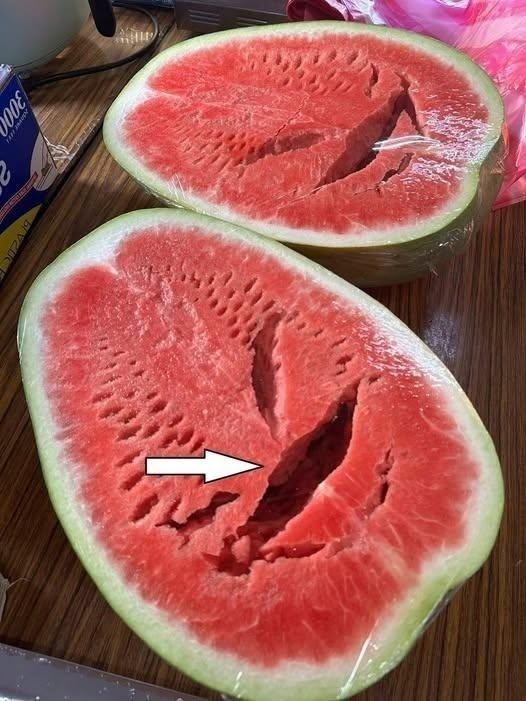
That kind of warning is another viral exaggeration. Seeing cracks inside a watermelon does not automatically mean it’s dangerous or toxic.
Let’s break down what it actually means.
🍉 What “cracks” inside a watermelon usually are
Most of the time, these are harmless and caused by natural growth conditions:
🌱 1. Rapid growth (most common cause)
If a watermelon grows too quickly due to:
- Heavy watering after dryness
- Warm temperatures + sudden rain
- Fertilizer changes
👉 The flesh can develop internal splitting or cracks
This is called internal “hollow heart” or flesh separation in some cases.
🍉 2. Seed separation or natural texture
Some varieties naturally have:
- Fibrous lines
- Slight internal splitting
- Uneven flesh structure
These are not signs of spoilage.
❄️ 3. Cold storage effects
Very cold storage can sometimes:
- Change texture
- Create small internal separations
Again, not dangerous.
⚠️ When you SHOULD not eat watermelon
Cracks alone are NOT the issue. Look for these real warning signs:
- Sour or fermented smell
- Slimy texture
- Foamy juice or bubbling (fermentation)
- Mold on flesh or rind
- Off or alcoholic taste
These indicate spoilage, not just “cracks.”
🧠 Why viral posts say “stop eating immediately”
They mix up:
- Natural growth patterns
with - Food spoilage or contamination
This creates unnecessary fear.
🍽️ Bottom line
- 🍉 Internal cracks = usually harmless growth condition
- ❌ Not automatically dangerous
- ⚠️ Only avoid eating if there are signs of spoilage
If you want, I can also explain how to pick a perfectly ripe watermelon without cutting it first—there are a few simple tricks that actually work.