The color of your urine can give useful clues about hydration and sometimes overall health—but it’s not a diagnosis on its own. Urine color mainly reflects water balance, diet, and certain medical conditions.
Here’s a simple guide:
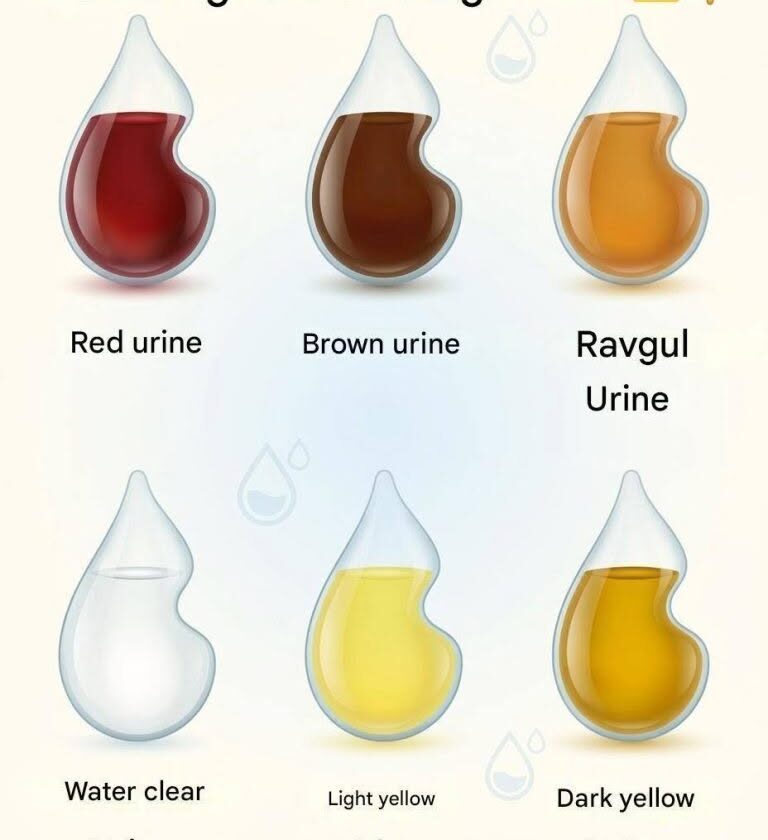
💧 Light yellow (pale straw)
This is usually ideal. It suggests good hydration and normal kidney function.
💦 Clear urine
Often means you’re very well hydrated—or possibly drinking more water than you need. Consistently completely clear urine can sometimes mean you’re overhydrating.
🌼 Dark yellow / amber
Most commonly a sign of mild dehydration. You may need more fluids.
🍯 Honey or dark orange
Stronger dehydration is possible, but it can also come from:
- certain vitamins (especially B-complex)
- medications
If it persists, it’s worth paying attention.
🟤 Brown or cola-colored
This is more concerning. Possible causes include:
- severe dehydration
- liver issues (like excess bilirubin)
- muscle breakdown (rare but serious)
If this is not from food or medication, it should be checked.
🌈 Pink or red
Can be caused by:
- blood in urine (needs medical evaluation)
- beetroot, berries, or food dyes (harmless causes)
If you didn’t eat anything that explains it, it should not be ignored.
🟢 Blue or green (rare)
Usually from:
- certain medications
- food coloring
- rare infections
⚠️ Cloudy urine
Can suggest:
- dehydration
- urinary tract infection (Urinary tract infection)
- crystals or other changes in urine composition
If paired with burning or pain, infection is more likely.
🧠 Key takeaway
Most urine color changes are about hydration and diet, not disease. The most useful “healthy target” is:
👉 pale yellow most of the time
🚨 When to seek medical advice
Pay attention if you notice:
- blood (red/pink) without food cause
- brown/cola urine
- pain or burning while urinating
- fever or strong odor with cloudy urine
If you want, I can also explain what urine smell, frequency, or foaminess can indicate—they’re often discussed together with color.