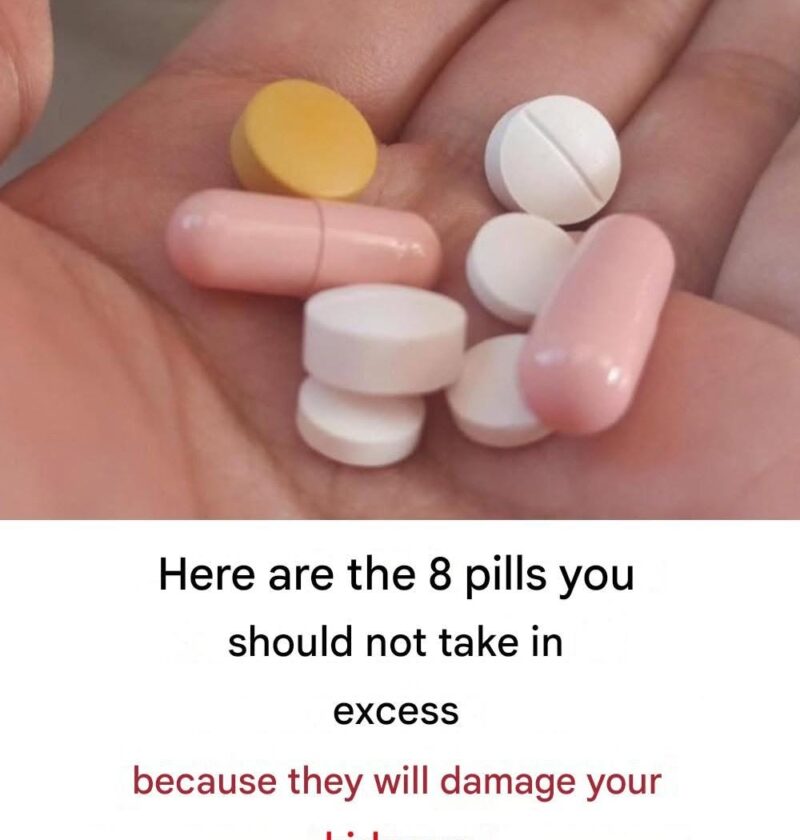
There isn’t a safe, universal list of “8 pills you should never take,” because many medicines are important and only become risky in certain doses, durations, or health conditions (especially dehydration, existing kidney disease, or combining drugs).
But there are several commonly used medications that are known to stress or damage the kidneys when misused or overused:
1) Ibuprofen (and other NSAIDs)
Examples: ibuprofen, naproxen, diclofenac
- One of the most common causes of medication-related kidney stress
- Higher risk with long-term use, dehydration, or older age
2) High-dose aspirin (not low-dose heart aspirin)
- Can reduce blood flow to kidneys in high doses
- Low-dose aspirin for heart protection is usually different and medically supervised
3) Certain antibiotics
Examples: gentamicin, vancomycin
- Can be toxic to kidneys, especially in high doses or IV use
- Usually monitored in hospitals
4) Some contrast dyes (for CT scans)
- Not pills, but important to know
- Can temporarily or permanently affect kidney function in high-risk patients
5) Lithium (for bipolar disorder)
- Long-term use can gradually damage kidneys
- Requires regular blood and kidney monitoring
6) Proton pump inhibitors (PPIs)
Examples: omeprazole, esomeprazole
- Long-term use has been linked to chronic kidney disease in some studies
- Risk is mainly with prolonged, unnecessary use
7) Certain antiviral or chemotherapy drugs
- Examples vary widely
- Often kidney-protective measures are used alongside them
8) Herbal “detox” or unregulated supplements
- Not always pills from pharmacies
- Some contain hidden heavy metals or toxins that harm kidneys
Important reality check
- Most of these are safe when used correctly and prescribed
- Kidney damage usually happens with:
- Overuse
- Mixing medications
- Dehydration
- Existing kidney disease
When to be careful
You should be extra cautious if you have:
- Diabetes
- High blood pressure
- Kidney disease history
- Frequent dehydration (heat, fasting, illness)
If you want, tell me what medicines you’re actually taking or saw in that video—I can tell you which parts are accurate and which are exaggerated.